Travel Tips

What to
Expect
travelling in
Morocco
Visitors on holiday in Morocco will find a wide variety of accommodation styles and standards. Let Berber Treasures take you on one of our Morocco tours and you will experience a Morocco travel adventure of a lifetime where you can:
- Experience the fabulous and exotic riads in Morocco
- Enjoy the thrill of staying in a Moroccan Kasbah
- Immerse yourself in the adventure and romance of camping out under the stars in a desert camp in the soaring Sahara Desert sand dunes
- Choose a local Moroccan hotel or one of the international hotels
- Get a insight into the daily life of Morocco’s Berber people with a home stay with a local Berber family
It’s all possible on one of our Berber Treasures tours to Morocco.



What can you expect on our tours?
We recommend and select a variety of accommodation on our Morocco tours. Our selections and recommendations depend on the itinerary routing you have chosen for your holiday in Morocco and are based on factors such as location, ambience, authenticity and comfort.
To get the most out of your Morocco travel experience we recommend you stay in kasbahs and riads in Morocco as much as possible as well giving into your adventurous spirit and trying at least one night camping at a desert camp in the glorious sand dunes of the Moroccan Sahara Desert.
If you choose one of Berber Treasures private tours of Morocco you have the freedom to choose your preferred style and standard of accommodation – we will tailor your Morocco travel itinerary to suit your individual interests and preferences.
And if you choose one of our Berber Treasures small group tours to Morocco, you can be confident we have your ultimate Morocco travel experience in mind with our selection of hotels, Kasbahs and riads in Morocco.
Berber Treasures only uses riad and kasbah rooms with their own private ensuite facilities, with very limited exceptions. In some remote locations suitable private ensuite facilities are not available – where this is the case we will let you know.
We use trusted English speaking Moroccan driver/guides who are experts in Morocco travel. Many of our driver/guides are from the same extended family and they all bring with them the great Moroccan sense of family respect and love of life that will see them looking after you on your Berber Treasures Morocco travel adventure as if you were an exalted member of the tribe.
Most of our driver/guides also speak other languages including French, Spanish and Italian, in addition, to their native Berber and Moroccan Arabic. Please advise us if you have special language requirements – we will do our best to accommodate you during your holiday in Morocco.
You will be met and accompanied by one of our Berber Treasures driver/guides throughout your holiday in Morocco. Your driver/guide will provide narration and information throughout your tour about the history, culture, sights and matters of general interest. Naturally your driver guide cannot be a specialist in all areas of interest so we choose our driver/guides for their specialist knowledge of the mountains and desert areas. For the cities and special historic sites (eg Volubilis) location specialist local city/site guides are the experts (see below); consequently, your driver/guides does not accompany you on the walking portions of your sightseeing in the cities and these special historic sites. Where possible your driver/guide will make suggestions and reservations for restaurants, entertainment, shopping and optional activities and can assist with hotel check-in documentation (local authorities require various details to be provided) and provide guidance with local customs and culture.
Please be assured your Berber Treasures driver/guide will do his best to help you with all aspects of your holiday in Morocco however, he is not permitted to engage in bargaining for any purchases you may wish to make.
For the comfort and safety of all and in compliance with Moroccan law, we require all of our driver/guides to break for lunch and to refresh every few hours when driving. We ask you to bear this in mind if at one time or another you do not feel particularly in need of lunch or a break yourself.
Generally, we use official specialist local city/site guides only for specified city/site tours in Morocco. Local guides are independent operators registered by the particular local government authority as an official licensed specialist local guide for the particular city or site. They are not Berber Treasures’ employees. Your itinerary will indicate those activities where a local city/site guide is included. Should you wish to use a local city/site guide at other locations this can be included (on request and where available) in your Morocco travel and tour itinerary. Alternatively, local city/site guides may be available at some sights on arrival; in which case, if you wish you can negotiate their fee with them. As with other bargaining, your driver is not permitted to negotiate on your behalf for the guide’s services.
Moroccan law allows only licensed local city/site guides and licensed national guides to guide tourists on city tours of Fes, Marrakech, Meknes, Essaouira and other Moroccan cites and through historical sites such as Volubilis.
If you choose a Berber Treasures Morocco private tour we can cater for a party of any size regardless of whether you are travelling alone, with family or friends or with a large group. If you prefer Berber Treasures’ small group tour of Morocco, group numbers are strictly limited.
You must hold comprehensive travel insurance for the full duration of your tour in order to participate in this tour. This must provide coverage for any overseas medical costs, and we strongly recommend you take out cover that includes medical evacuation. You must ensure, and you are solely responsible for doing so, all activities you will or may engage in while on your tour are covered by your travel insurance.
On our Morocco tours we use professional licensed tour vehicles including: air-conditioned cars, 4-wheel drive vehicles, mini-buses and buses, depending on group requirements and your Morocco travel itinerary.
Join us in Morocco – our experience conducting wheelchair and disabled access tours to Morocco helps ensure your Morocco travel experience is as comfortable and enjoyable as possible. We can help you with what to expect locally in terms of wheelchair and mobility access. The flexibility of our private Morocco tours allows us to design a Morocco travel itinerary that best suits your individual circumstances and interests.

When to travel to Morocco
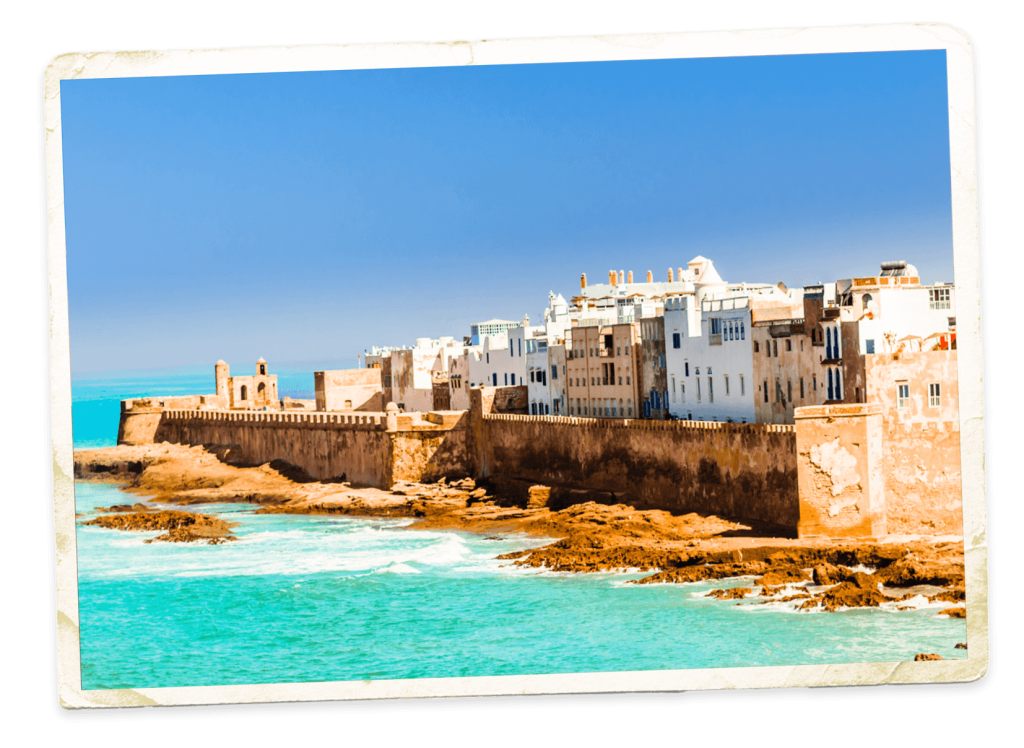
The climate in Moroccan varies both seasonally and by geographic zones. Along the coastline the average daytime temperature ranges from about 12°C in winter (December through February) to 25°C in summer (June through July). In the mountains the winter daytime temperature may drop as low as minus 20°C in the highest areas, with snow sometimes blocking the high mountain passes such as Tizi n’Tichka (2260m) and Tizi n’Test (2092m). During the summer the temperature rises to a pleasant, cool daytime average of around 15°C. In contrast, the average daytime temperature in the Morocco desert areas in the south of the country ranges from 17°C in the winter to 40°C in summer.


Public holidays in Morocco
2025 Moroccan public holidays
|
January 1
|
New Year’s Day
|
|
January 11
|
Manifesto of Independence
|
|
March 31/April 01*
|
Eïd al-Fitr (End of Ramadan)
|
|
May 1
|
Labour Day
|
|
June 06/07*
|
Eïd al-Adha (Feast of the Sacrifice)
|
|
June 27/28*
|
Fatih Muharram – Islamic New Year
|
|
July 30
|
Feast of the Throne
|
|
August 14
|
Oued Ed-Dahab (Allegiance Day)
|
|
August 20
|
The People’s Revolution Day
|
|
August 21
|
King’s Birthday
|
|
September 06/07*
|
Eïd al-Mawlid (Prophet’s Birthday)
|
|
November 6
|
Green March Day
|
|
November 18
|
Independence Day
|
2026 Moroccan public holidays
|
January 1
|
New Year’s Day
|
|
January 11
|
Manifesto of Independence
|
|
March 31/April 01*
|
Eïd al-Fitr (End of Ramadan)
|
|
May 1
|
Labour Day
|
|
June 06/07*
|
Eïd al-Adha (Feast of the Sacrifice)
|
|
June 27/28*
|
Fatih Muharram – Islamic New Year
|
|
July 30
|
Feast of the Throne
|
|
August 14
|
Oued Ed-Dahab (Allegiance Day)
|
|
August 20
|
The People’s Revolution Day
|
|
August 21
|
King’s Birthday
|
|
September 06/07*
|
Eïd al-Mawlid (Prophet’s Birthday)
|
|
November 6
|
Green March Day
|
|
November 18
|
Independence Day
|

Ramadan
Ramadan is a period of fasting for Muslims and is observed widely throughout Morocco. Ramadan lasts for approximately 4 weeks and moves forward approximately 10 days each successive year. Aside from the public holiday celebrating the end of Ramadan, the month of Ramadan is not a public holiday. People will be working. Souks, markets and tourist sites will be open.
Taking you holidays in Morocco during Ramadan offers a uniquely different Morocco tour experience to that enjoyed by tourists who holiday in Morocco at other times of the year. In general the tourist cafes, restaurants and sights are open a little later in the morning during Ramadan. You can expect your Berber Treasures driver/guides, tour coordinator and local guides will observe Ramadan neither eating nor drinking between sunrise and sunset.
You are not expected to fast and will be able to obtain food and drinks during the day. However, we ask that you be aware of and understanding that fasting Moroccans, including your tour driver/guide, local guides, accommodation staff, restaurant/café staff, will break their fast at sundown. Alcohol is not sold by liquor stores during Ramadan.
Feast of the Sacrifice
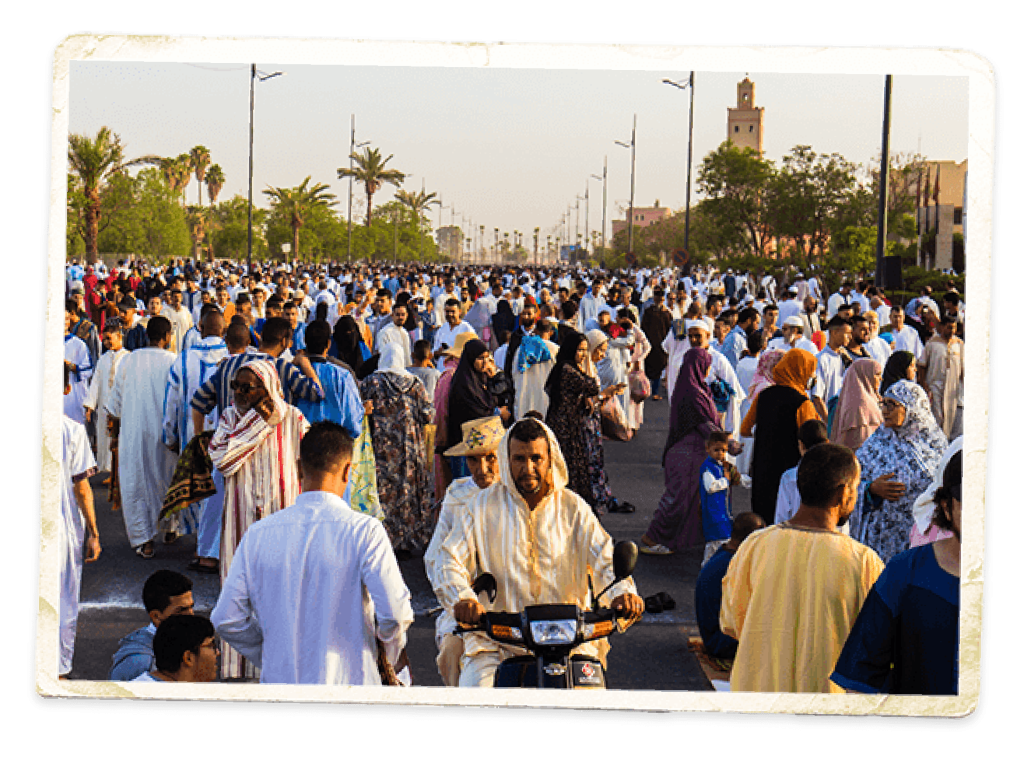
Colloquially referred to as the Feast of the Sheep, the Feast of the Sacrifice is a much loved holiday enjoyed and celebrated together with family. The feast day is a public holiday and it, together with the following couple of days or so, is a quieter time in Morocco. Historical sites are generally open. In the larger cities such as Marrakech and Fez the markets and souks will be operating but will likely be quieter than usual. The markets and souks generally return to full vibrancy within three to four days or so following the holiday. Alcohol is not sold by liquor stores during this period.

What about...?
Moroccan riads and kasbahs are a wonderful, uniquely Moroccan experience.
Riads are traditional Moroccan city houses and palaces built around a central rectangular courtyard. Traditional Moroccan riads are designed as a sanctuary from the outside and focus of the rooms is inward looking to the peace and tranquillity of the courtyard and not to the outside views. Consequently, in the Moroccan style it is unusual for riads (or kasbahs) to have large windows opening to an exterior street views. Rather their principal windows typically open to the internal courtyard around which the house is built. In a true riad, the only terrace is the roof terrace. In many cities and larger towns old riads been restored and converted into wonderful boutique hotels. A single riad typically has between 4 to 8 rooms for guests.
Kasbahs are the original homes and palaces of Morocco’s desert Berber people – you can see and experience a kasbah on one of our Morocco desert tours. Traditionally, Moroccan kasbahs are constructed with mud bricks made from rammed earth. The walls are smoothed and the kasbah can be decorated externally with elaborate brick-work patterning, towers and turrets, hand-worked iron window grills, and protruding window bays. As with riads, some Moroccan kasbahs have been transformed into boutique hotels while others have been purposed built.
Riads & Kasbahs – 3, 4 & 5 star: In most locations there are riads & kasbahs available in a wide range of standards including charming, budget 2 & 3 star, superior, atmospheric 4 star and luxurious, exotic 5 star equivalent.
Many riads and kasbahs do not include in room facilities such as telephones, bar fridges or televisions. This is not necessarily tied to the luxury level of the riad or kasbah but is often a function of the ambience the owner has chosen. Typically, each room in a riad and kasbah is given its own personality, so there can be a wide variation in size, decoration, style and accoutrements – some just a matter of taste while others are chosen so as to put a room in a different luxury/price point category.
At check-in to your tour accommodation you must provide the usual sort of personal details (eg name, address, passport details) together with the official entry number assigned to you and recorded in your passport by Moroccan immigration when you entered Morocco. This is a legal requirement — you must provide these passport details and allow the reception staff to sight your passport.
Morocco produces excellent red and white wine and beer which tourists can purchase from licensed supermarkets and liquor stores in larger cities and towns, except during religious holidays. Imported wines and spirits are sold by some shops. Larger hotels and tourist restaurants generally serve alcohol. It is illegal to consume alcohol at unlicensed public restaurants and cafes or in public areas.
Airlines offering direct flights to Morocco from the Europe, Canada, the US and the Middle East include several major airlines eg Emirates, Etihad, Qatar, Royal Air Maroc, Iberia, British Airways & Air France, as well as some mid-tier and budget European airlines.
It is also possible to travel to Morocco by ferry from several European ports.
Arrival cities – international flights: Casablanca and Marrakesh are the primary flight arrival /departure points. Most major airlines fly into Casablanca whereas most mid-tier and budget airlines fly into Marrakech.
There are very limited international flights into other Moroccan cities eg Tangier, Ouarzazate, Fez, Agadir.
There are no direct flights between Morocco and Australia or New Zealand. For travel from Australia or New Zealand, generally, the more convenient routes are via the United Arab Emirates, Qatar, Etihad or the United Kingdom, France or Spain.
Arrival cities – international ferries: Ferry travel to Morocco is predominately between Tangier (Tangier Ville or Tangier MED Ports) and the Spanish ports of Algeciras and Tarifa.
Morocco is a Muslim country. While there are no legal restrictions regarding clothing, travellers who dress in a manner courteous and respectful toward the people, culture and religion of Morocco will themselves be treated with courtesy and respect. In respect to local cultural traditions and to maximise the opportunity for cultural interactions we provide the following information:
Tight form fitting sports attire (leisure wear) is culturally inappropriate.
We suggest women dress modestly in loose fitting clothes that cover the shoulders, upper arms and knees. Ultimately it is a matter of a woman’s own discretion but in respect for the local culture and traditions, we suggest avoiding wearing tight or revealing shirts, dresses, skirts or tops. When you are in public, please consider avoiding shorts or skirts and dresses hemmed above the knee. Three-quarter or full length pants, longer skirts and dress are preferable as are T-shirts and short sleeve shirts. Head scarves, or other head coverings, and jelabas (a loose fitting caftan type gown worn over clothes by Moroccan women in public) are unnecessary.
The electricity throughout Morocco is 220V although you may find some 110V outlets in some hotels and riads in Morocco. You will need a suitable round adaptor with two extended cylindrical prongs on a cylindrical barrel– generally most adaptors for Europe should suffice.
Moroccan food is usually a delicious freshly, cooked meal with lunch and dinner being the main meals. While spicy and aromatic, typically, Moroccan dishes are not hot like some Indian and Southeast Asian food. Each region is known for its own speciality dishes.
Commercially bottled water and most popular non-alcoholic drinks are readily available. You should not drink untreated tap water. Tea is universally dunk and used as a welcoming drink by Moroccans. Moroccan tea, which is not to be missed, is a type of green tea often blended with fresh mint and always with a lot of sugar.
While there are currently no compulsory vaccinations required for travel to Morocco you should check with your doctor any specific recommendations for you. You can also find health information for travellers on both the Department of Affairs website at www.smartraveller.gov.au and the World Health Organisation (WHO) website at https://www.who.int/travel-advice.
Morocco’s mobile network covers much of but not all of the country. All major Moroccan telecommunication carriers (Maroc Telecom, Orange and Inwi) all offer pre-paid SIM cards you can load with pre-paid credit for mobile telephone/data access.
- Mobile Internet: Mobile data coverage outside of major metropolitan areas can be patchy but is improving; downloading speeds can be sluggish. Smartphones and tablets devices from Australia, New Zealand and most of Asia Pacific, Europe, Africa and the Middle East should be compatible with the Moroccan mobile internet network.
- Mobile Telephone: Morocco’s mobile network provides good mobile telephone coverage throughout most of Morocco. There are areas, particularly in the desert, mountain and remote regions where you will not receive mobile telephone reception. Mobile telephones and smart phones from Australia, New Zealand and most of Asia Pacific, Europe, Africa and the Middle East should be compatible with the Moroccan mobile telephone network.
- Wired & Wi-Fi Internet: Most superior and higher standard Moroccan hotels, riads and kasbahs offer internet access for guests, but again signal strengths and download speeds can vary.
Arabic and Tamazight (an Amazigh (Berber) language) are the country’s official languages. French is relatively widely spoken in business and in tourist areas. Outside of hotels, restaurants and shops catering for tourists, English is not as widely spoken.
The major ethnic groups in Morocco are Imazighen (Berber), Arab and Imazighen-Arab. The principal minor ethnic groups include Jewish and European.
Most, if not all your tour hotels, riads & kasbahs offer laundry services. There are also commercial laundry/dry cleaning places (not laundromats) in the cities and mid-larger towns.
There are lots of great options for meals in Morocco including local cafes, and restaurants with good tasty food and local atmosphere. Moroccan food uses lots of spices but typically in a flavoursome rather than hot spicy manner. Your Berber Treasures driver/tour co-ordinator can make recommendations and suggestions as suggest places you might like to eat and can make any necessary reservations for you.
Ensure you pack any necessary prescription medications. In Morocco you cannot obtain prescription medications without a medical prescription. There are pharmacies throughout Morocco, but unless you know the French name (it may be different to the English name) you might have difficulty finding what you want. We suggest also bringing a small travel kit carrying any non-prescription medications you think you may need. You may consider carrying an over-the-counter antibiotic cream and hand-wash and including something for common gastrointestinal traveller’s complaints (e.g. something for the nausea & diarrhoea and rehydrating supplements).
Most common day-to-day toiletry products are available in Morocco, including shaving creams, razor blades, toothpaste, toothbrushes, mouth washes, feminine hygiene products, shampoos, deodorants, tissues and toilet paper. In the large cities (e.g. Casablanca, Fes and Marrakech) you can find a wider selection, with several larger European brands available, than in the smaller towns and villages. In the smaller towns your choice will be limited and may be restricted to Moroccan brands with few or no European brands available.
The Moroccan currency is the Dirham. You can only purchase Moroccan currency in Morocco – it is forbidden to sell it outside of Morocco.
Where to exchange money: There are bank and private commercial exchange outlets at the airports and ferry terminals. There are also banks and ATMs in Morocco’s cities and many towns but not in villages and more rural areas.
Your Berber Treasures driver/guide will take you to a bank as required but let him know in advance so he can program it into the day’s activities.
Getting Moroccan Dirham: Cash, cards and travellers’ cheques can be used to obtain/exchange most major currencies for Dirham.
- Exchanging Australian or New Zealand dollars:
- Cash or travellers’ cheques in those currencies are not accepted anywhere in Morocco.
- Cards from Australian and New Zealand banks can be used to withdraw/exchange for Dirham. This includes credit cards, debit cards, automatic teller cards (ATM) and many travel cards, provided your bank is part of the international electronic banking network (e.g. CIRRUS, MasterCard & Visa).
- Major currencies such as US dollars, Euros and British pounds can be used to obtain Dirham as can cards from those countries issued by banks part of the international electronic banking network (e.g. CIRRUS).
You will need Moroccan Dirham cash.
While credit and debit cards are accepted at many mid-larger sized hotels and restaurants and shops catering to tourists, and acceptance is increasing, they are still not widely accepted in Morocco.
Card payments in Morocco: If your card has an electronic chip you may need a pin number to use it. Check your bank’s requirements before travelling to Morocco.
We also recommend advising your bank you will be travelling in Morocco to minimise the risk of inadvertently triggering your bank’s security protocols for potentially suspicious transaction.
Exchanging Moroccan Dirham: You must exchange your Dirhams before departing Morocco. It is illegal to export Dirham.
It is important to obey Moroccan laws concerning photography of government establishments and persons. For instance, it is prohibited to photograph police, military establishments, military personnel, or most government buildings. Please review your local Moroccan government embassy’s website for further information or contact the embassy for assistance.
As a matter of respect and courtesy, if you wish to take a photograph of an individual or small group of individuals you should first seek and obtain permission prior to doing so. It is a matter of tradition, modesty and culture – please respect their wishes. If permission is granted it is appropriate and respectful to offer adults a modest gift of Dihram and in the case of children, pens, note books or other items for school, clothes or occassionallly lollies. Common sense apllies: if you do not wish to offer a tip/gift, don’t take the photograph.
Respecting Moroccan Culture: If you are in a private setting, such as a Moroccan home, where you meet women who agree to be photographed do not post photographs of these women on social media or otherwise publish the photographs unless you have first obtained permission to do so.
Morocco is a Muslim country with long history of religious tolerance and respect for all Abrahamic religions.
Morocco is steeped in centuries of Jewish heritage and history throughout the country. Moroccan’s Jewish population, together with those of Moroccan Jewish heritage, continue to observe their faith in Synagogues and at other spiritual sites. Christian church services are offered in many locations.
Ramadan and the Feast of the Sacrifice aside, generally Morocco’s Muslim religious celebrations and holidays do not substantively affect our Morocco tours.
The tourism industry is very important to Morocco. Accordingly, the Moroccan authorities actively promote tourist safety. There are tourist police offices in every major city. Nevertheless, you should check government travel alerts and warnings before departing to Morocco. Your personal effects are your responsibility, and you should exercise care at all times, particularly in the medinas and other crowded areas.
It is customary to tip in Morocco – indeed it is part of Moroccan culture and is anticipated, but should not be demanded, for acceptable service received from, for example, driver/guides, local guides, hotel porters, café waiters, restaurant waiters, taxi drivers and toilet attendants. You will see Moroccans tipping each other. For many individuals the tips they receive will be their only or principal source of income.
Nevertheless, while tipping is customary it is discretionary. It is completely your decision whether to tip or not and how much to tip. Try not to be uncomfortable and understand it is part of the Moroccan culture.
As a rough guide only you may consider:
- per item/event tips: wheel-barrow porters in medinas Dh 10 per bag; cafe waiters and caretakers/custodians Dh 3-5; restaurant waiters Dh 5-10/10% of bill depending on standard of establishment; dancers/musicians/singers Dh 20 (per group/individual entertainer(s)); restroom attendants Dh 1-2;
- per 1-2 adult clients: hotel porters Dh 10-20; local city guides Dh 100-200 per day; and driver-guides around Dh 100–300 per day.
You can choose to tip more or less than these amounts – it is completely your decision.
It is customary to tip in Morocco – indeed it is part of Moroccan culture and is anticipated, but should not be demanded, for acceptable service received from, for example, driver/guides, local guides, hotel porters, café waiters, restaurant waiters, taxi drivers and toilet attendants. You will see Moroccans tipping each other. For many individuals the tips they receive will be their only or principal source of income.
Nevertheless, while tipping is customary it is discretionary. It is completely your decision whether to tip or not and how much to tip. Try not to be uncomfortable and understand it is part of the Moroccan culture.
As a rough guide only you may consider:
- per item/event tips: wheel-barrow porters in medinas Dh 10 per bag; cafe waiters and caretakers/custodians Dh 3-5; restaurant waiters Dh 5-10/10% of bill depending on standard of establishment; dancers/musicians/singers Dh 20 (per group/individual entertainer(s)); restroom attendants Dh 1-2;
- per 1-2 adult clients: hotel porters Dh 10-20; local city guides Dh 100-200 per day; and driver-guides around Dh 100–300 per day.
You can choose to tip more or less than these amounts – it is completely your decision.
If you are travelling on an Australian, New Zealand, Canadian, US, EU or UK passport a Moroccan entry stamp is issued on arrival to Morocco. There is no charge. Your passport needs to be valid at least 6 months.
Contact your local Moroccan Embassy or Consulate for all visa/entry related questions and to confirm current entry requirements.
Women travellers who are courteous and respectful toward the people, culture, traditions and religion of Morocco can expect to be treated with courtesy and respect.
We know what exactly what it is like for solo women travellers in Morocco, and we have also had many solo women travel in Morocco with us. Contact us with any questions.