Destinations

Breathtaking
Scenery
and exotic
Locations
Berber Treasures Morocco tours immerse you in exotic, unique and unforgettable Morocco exploring the fascinating history, landscape and culture of Morocco.
We have prepared this summary of Morocco’s most evocative and sought after destinations – all magnificent – for first time Morocco travellers to help you choose the right itinerary for your ideal Morocco tour.
For return Morocco travellers and those interested in exploring or focusing on a particular interest or aspect of Moroccan culture, history or country-side, there are plenty more enthralling destinations, including many only a local expert with our extensive knowledge and experience knows (you won’t find them in guidebooks) – and we know them all.

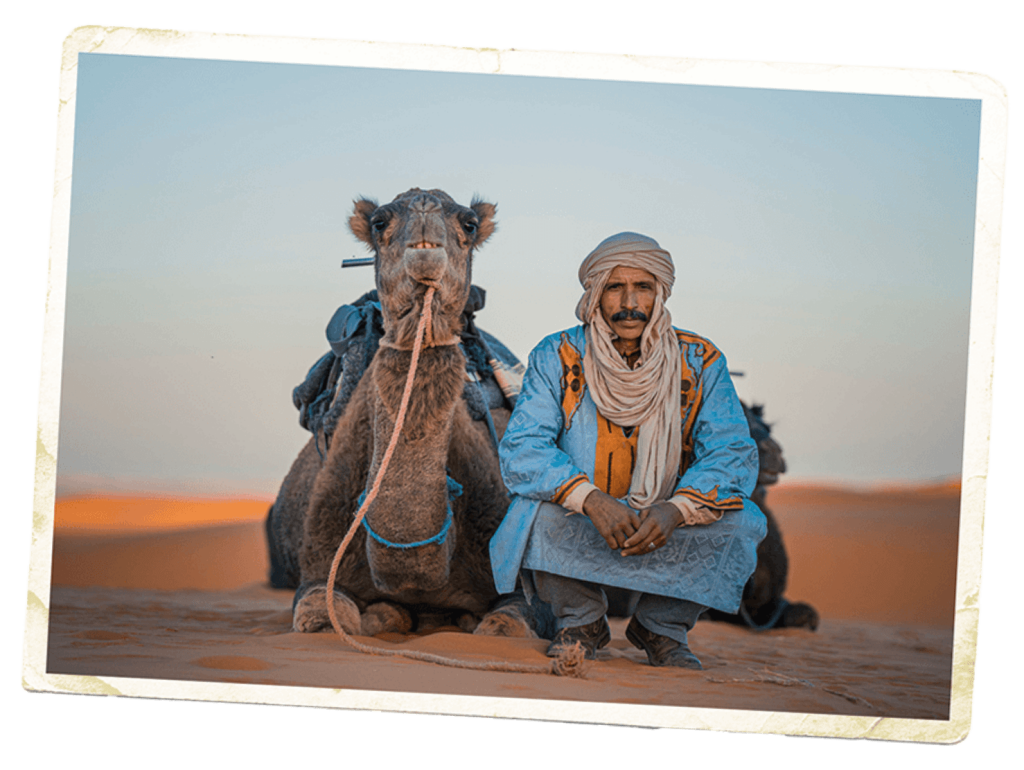
All of these destinations and more can be included in your unique private tour of Morocco – we will custom design a bespoke itinerary individually for you, incorporating your personal preferences and interests.
Our small group Morocco tours include a full choice of destinations; if your favourite small group tour itinerary is missing a must-see for you, then talk to us about including it as a pre or post tour extension.
We are here to help you choose the Morocco tour itinerary perfect for you!


Morocco’s Famous Cities, Towns & Villages
Experience the rich and varied history, architecture and exotic charm of Morocco’s cities, towns and villages. The ancient imperial cities of Rabat, Fes, Marrakech, and Meknes, with their medinas (historic town centres) and maze-like twisting streets, historical buildings and magical souks, contrast dramatically with the desert towns of Erfoud, Merzouga and Zagora and the coastal cities such as Essaouira and Tangier – each place striking in its own way.
Agadir
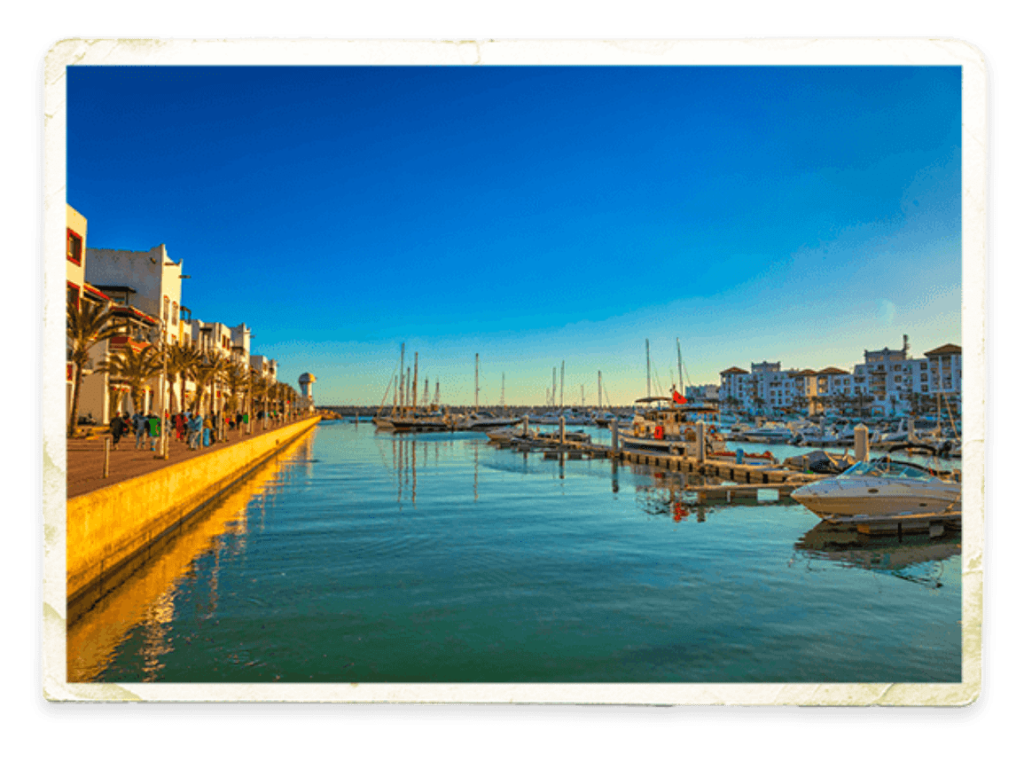
Agadir
Agadir’s sweeping Atlantic coast beaches make it one of Morocco’s premier beach holiday destinations. Nestled against the southern face of the High Atlas Mountains where they give way to the Atlantic Ocean, Agadir is the gateway city of the Morocco’s fertile Souss Valley region and a major shipping port.
Agadir’s imposing Oufella Kasbah is its most famous landmark. Situated atop the southeastern most foothill of the High Atlas Mountains overlooking the city to the south, Atlantic to the west and surrounded by the High Atlas to the north and east there has been a seemingly impenetrable fortress here for over five hundred years. From its newly restored Kasbah walls, visitors are treated to stunning panoramic views in every direction.
Characterised by its sweeping beaches, world class surfing spots, lush green parks and its Moroccan modernity, (most of the oldest parts of the city were rebuilt mid-20th century) Agadir is located within easy reach of other Souss Valley highlights such as historic Taroudant, Souss Masa National Park – a fauna wonderland, charming Tiznit and intriguing old villages of the southern High Atlas Mountains.
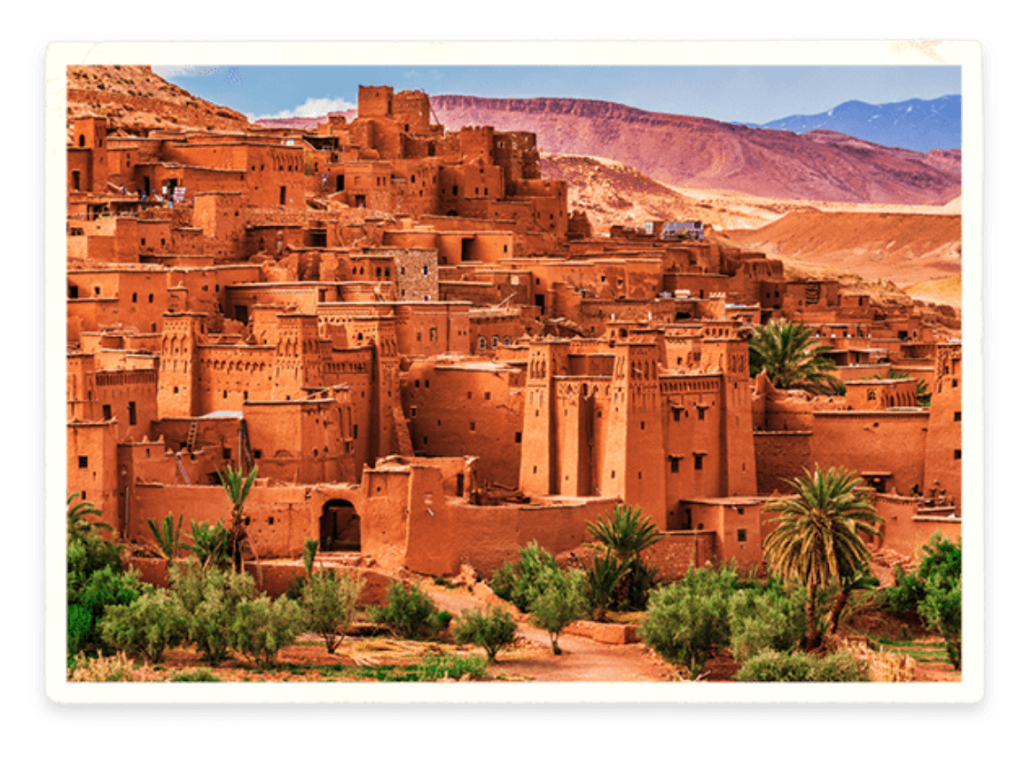
Ait Benhaddou
Ait Benhaddou
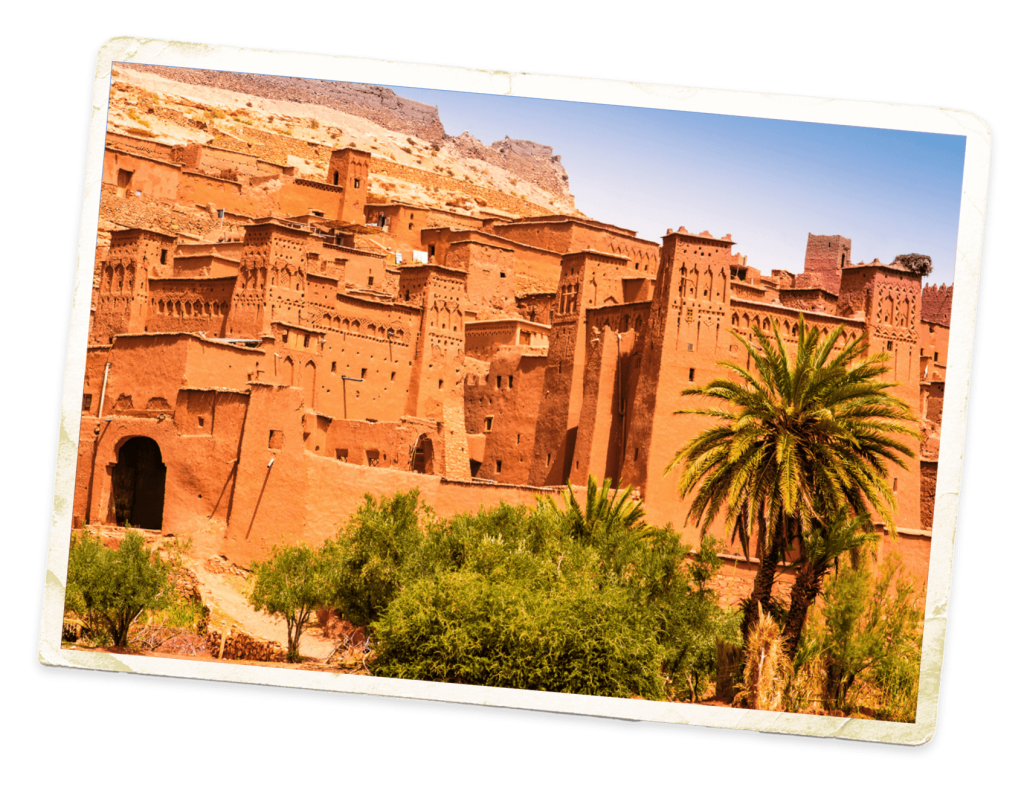
The stunning UNESCO world heritage village of Ait Benhaddou (Ait Ben Haddou) has some of Morocco’s most exotic and best preserved desert Kasbahs. These rammed-earth and mud-brick structures made optimal use of the available natural resources and environment to create complex, uniquely beautiful fortified homes and palaces; entire villages and towns of them – ksars. The old ksar (fortified village), situated on a hill and separated by a river from the new village, is largely uninhabited today and is explored on foot.
This Moroccan desert jewel was an important hub in the days of the Trans-Saharan camel caravan and is located in southern Morocco’s Sahara Desert, close to Ouarzazate and the western region of the High Atlas Mountains. This breathtaking Kasbah village has been a featured setting for many major film and television productions, including Gladiator, Games of Thrones, Lawrence of Arabia and The Mummy.
Asilah (Assilah)
Asilah (Assilah)
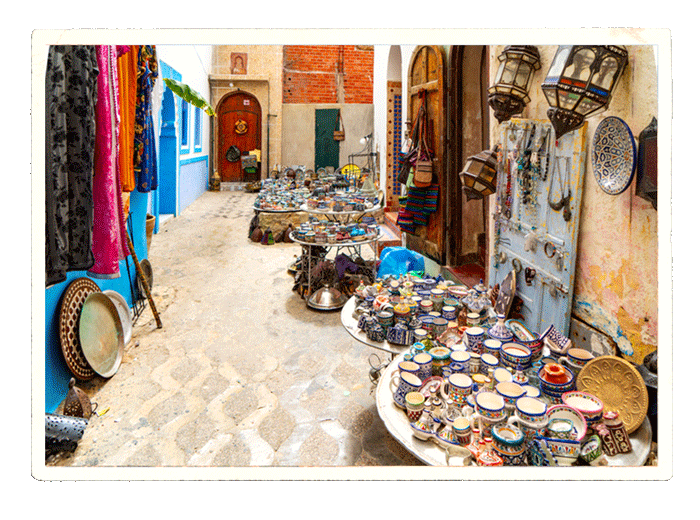
Pretty little Asilah, founded in the 12th century, lies on the North Atlantic not far from Tangier, Cape Spartal, Hercules Cave and Lixus. This pretty, coastal town’s historic old medina (old town centre) is surrounded by its stone masonry walls and bastions, predominately reflecting the Portuguese colonial modifications in the 15 & 16th centuries. Its eastern face is dramatically defined by its cliff top position overlooking the crashing Atlantic waters below.
During the summer the towns Arts Festival sees the streets of the old medina filled with art installations with the white face medina building being used a canvas for brightly coloured paintings, calligraphy and murals, some of which remain in place throughout the year. Adding to the local charm, the town is also a working fishing port with an active fleet of small blue fishing boats, and a popular beach holiday spot for Moroccans and tourists alike.
Tangier, Cape Spartel, Hercules Cave and Lixus are only a short distance from Asilah
Azrou
Azrou
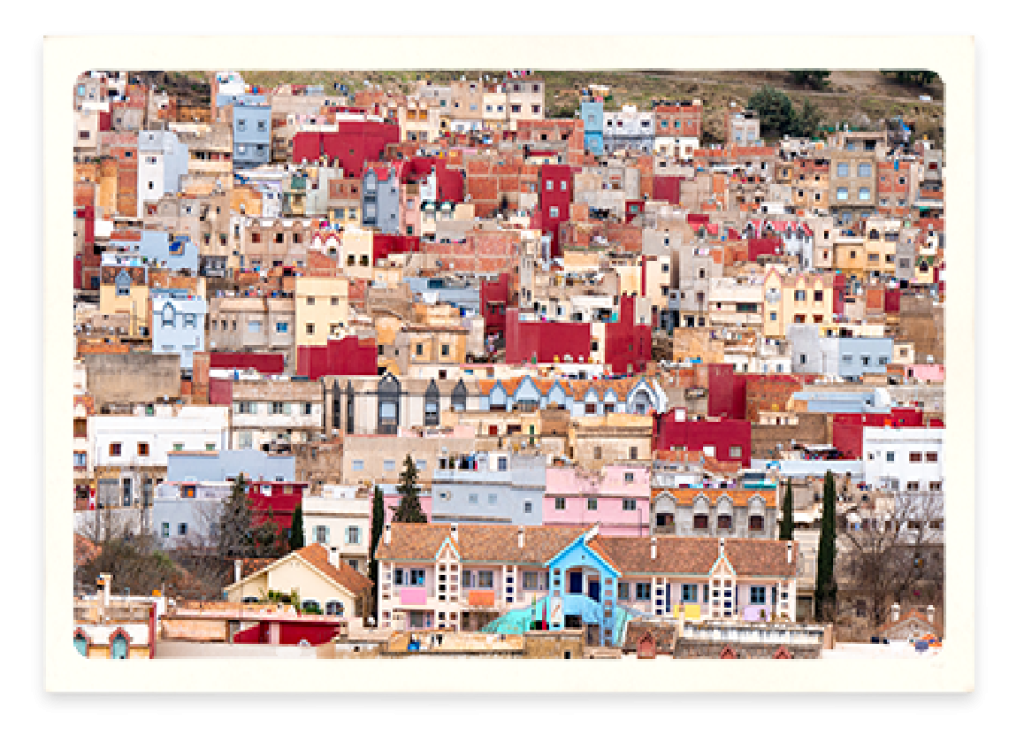
Azrou is an old Berber market town in the north of Morocco close to Meknes and Fes. The town lies in a wide, flat valley dominated by the mountain slopes of the Middle Atlas Mountains. In the nearby cedar forests you can find mature cedar trees, some over 30 meters tall and the native territory of the indigenous Barbary macaques.
Beni Mellal
Beni Mellal
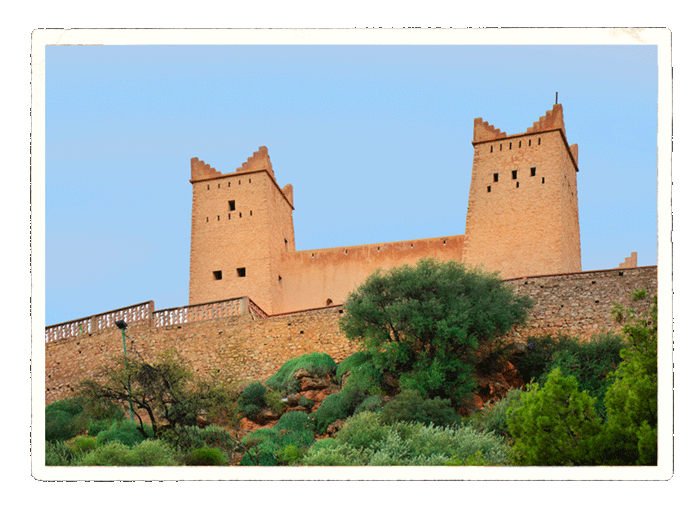
Nestled at the foot of the Middle Atlas Mountains, Beni Mellal offers a captivating blend of history and natural beauty. Founded in the 17th century, the city is home to the 16th-century Kasbah of Ras el Ain, which commands stunning views of the surrounding countryside and overlooks Ain Asserdoun – a natural freshwater spring cascading from its hillside source and meandering through the verdant terraced parklands.
Boumalne Dades
Boumalne Dades
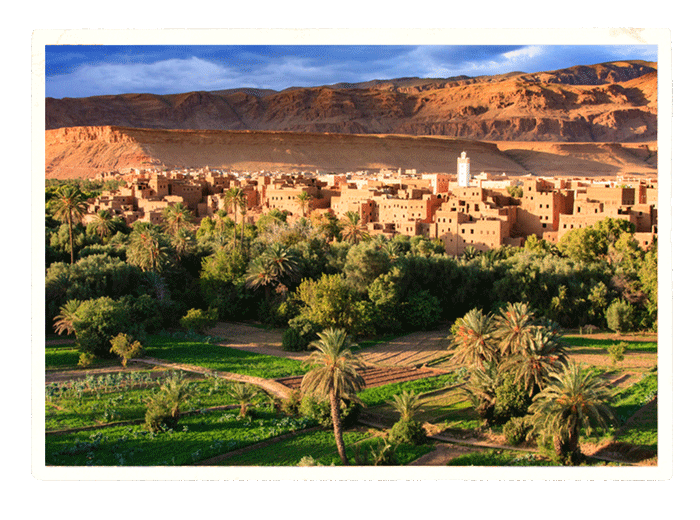
Boumalne Dades, located in Morocco’s Dades Valley, perches above the lush ribbon of the Dades River oasis, where the waters spill out of the High Atlas Mountains and fan into the valley below. This area is renowned for its breathtaking gorges and dramatic landscapes. Resting at the base of the mighty High Atlas Mountains, at the narrowest point of the valley, the Jbel Saghro Mountains seems just a hair’s breadth away. Boumalne Dades has served as a crucial stop for traders and travellers for millennia.
The natural beauty of the area is remarkable, with visitors drawn to the dramatic Dades Gorges hewn through the rocks of the High Atlas Mountains by the Dades River over eons, bustling local souks, traditional mud-brick kasbahs highlighting the town’s rich desert cultural heritage. Nearby, the Tagdilt Track is a magnet for birdwatchers and nature lovers.
Dades Gorge lies within reach of the desert oasis towns of Ouarzazate, Skoura and Tinghir, as well as the beautiful Todra Gorge.
Casablanca
Casablanca
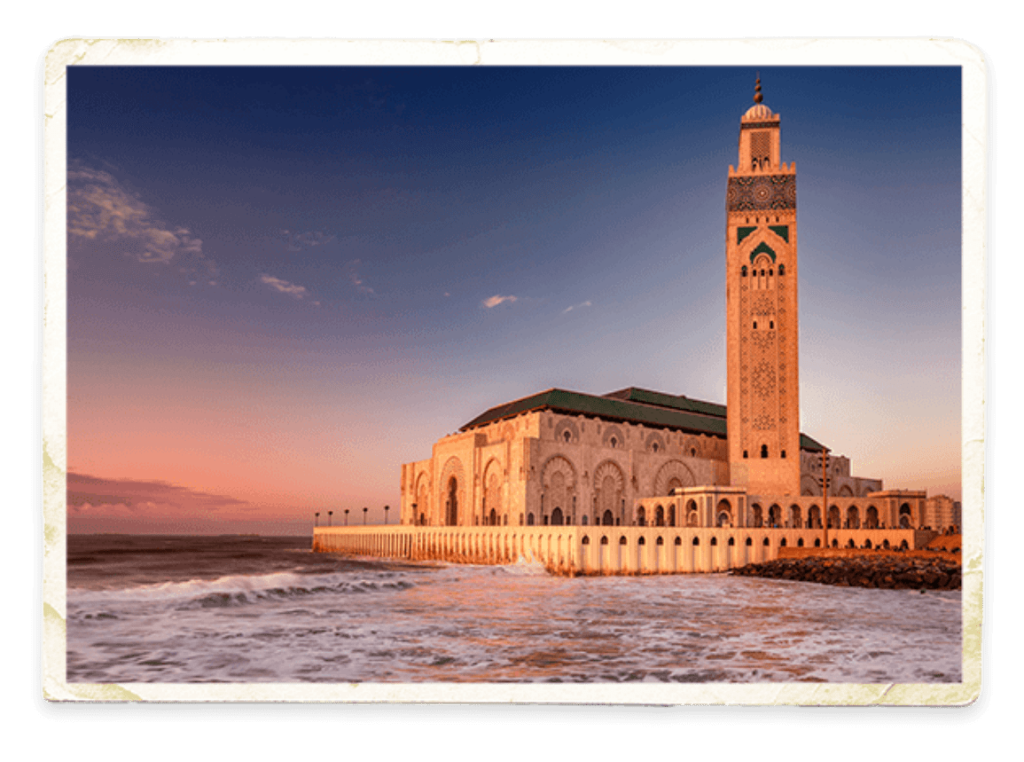
Casablanca is the largest and arguable most international renowned Moroccan city. Here, the old and the new coexist from the original, walled medina to the fading elegance of the art deco building facades in the old French colonial district, and the modern Hassan II Mosque which dramatically juts over the Atlantic Ocean on an ample seaside promontory – one of the largest mosques in the world.
Located on the Atlantic coast, Casablanca is Morocco’s economic capital. As the centre of business and industry, Casablanca is home to the country’s principal commercial port and its largest international airport, Mohammed V International Airport. Its location makes it a popular starting point on many Morocco tour itineraries. Both Rabat and El Jadida lie close to Casablanca.
Chefchaouen (the “Blue Town”)
Chefchaouen (the “Blue Town”)
Located in the Rif Mountains south of Tangier and Tetouan and to the north of Fes, the small mountain town of Chefchaouen dates back from the 15th century. Tucked onto the steep Rif mountain side below twin mountain peaks, the pretty old historic section of Chefchaouen – still largely encircled by its 16th century battlements – maintains a medieval feel. The central 15th century Kasbah walls enclose its tranquil Andalusian-style garden and overlooks the lively café filled Uta el Hammam Plaza and town as it spills out over the steep mountainside.
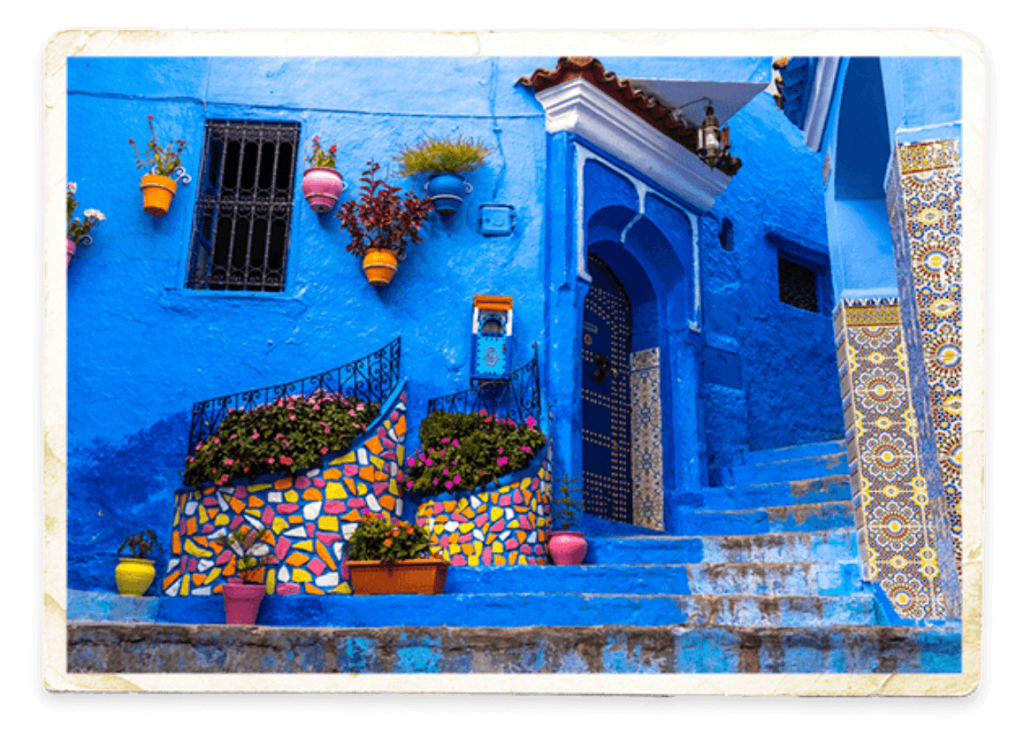
Chefchaouen’s old medina (old town centre), with its pretty blue-washed buildings have earned the town its affection nickname of Morocco’s “blue town”.
El Jadida
El Jadida
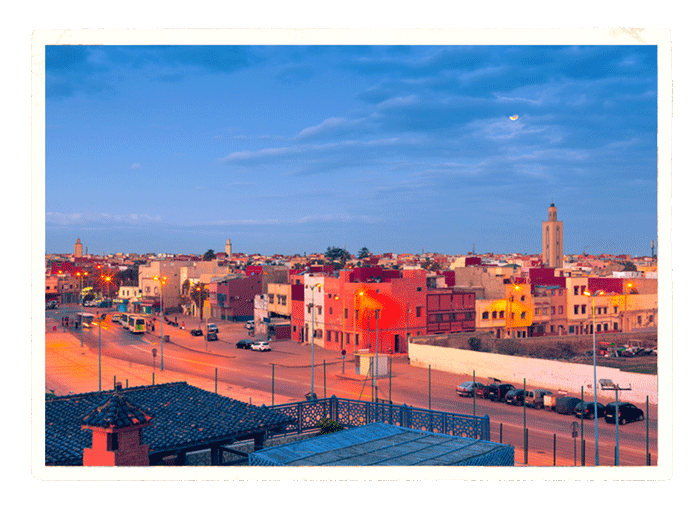
Sultans and Kings wrestled for control of the UNESCO world heritage Atlantic coast town of El Jadida. The Portuguese seized control in the 16th century Portuguese and remodelled their new colony port with buildings and fortifications reflecting classic Portuguese style. Within the 16th Portuguese citadel visitors can find a blend of traditional Moroccan and Portuguese colonial buildings and fortifications.
Located close to Casablanca, El Jadida is popular amongst Moroccans as a summer beach destination. Each September-October the town celebrates Morocco’s ancient horse-centric culture with its annual international equestrian festival.
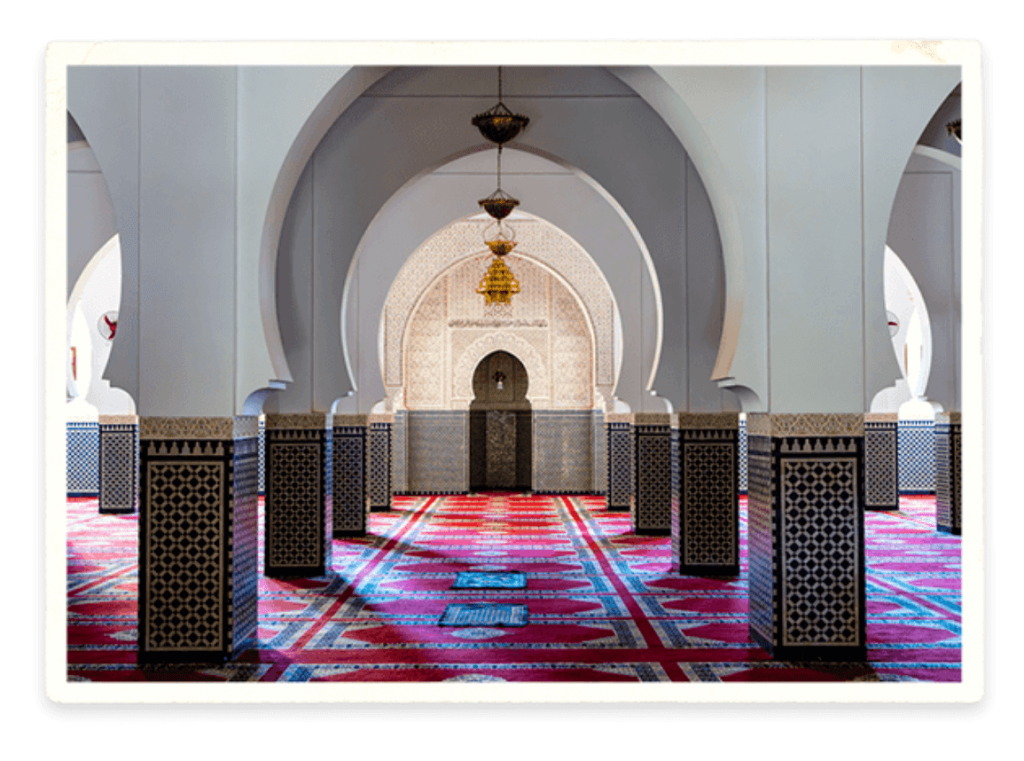
Erfoud
Erfoud
Located in the Ziz Valley and centre of the date-rich Tafilalt oasis, Erfoud lies in the Sahara Desert territory of Amazigh (Berber) nomads, some of whom settled permanently in the oasis area since at least the 14th century. These settlers constructed and maintained an extensive system of underground irrigation channels – ingeniously designed khettara, some still functioning today.
During the French colonial period, Erfoud was firmly established as regional centre and today is the gateway to the spectacular Erg Chebbi sand dunes of the Sahara Desert and Morocco’s desert oasis villages of Merzouga and Rissani.
Surrounded by Morocco’s rich fossil fields, Erfoud is renowned for thriving communal workshops where local artisans and specialists extract, carve and polish fossils. Its annual date festival celebrates its famed Tafilate date harvest – renowned worldwide for the quality of the regions dates – and desert heritage.
Essaouira
Essaouira
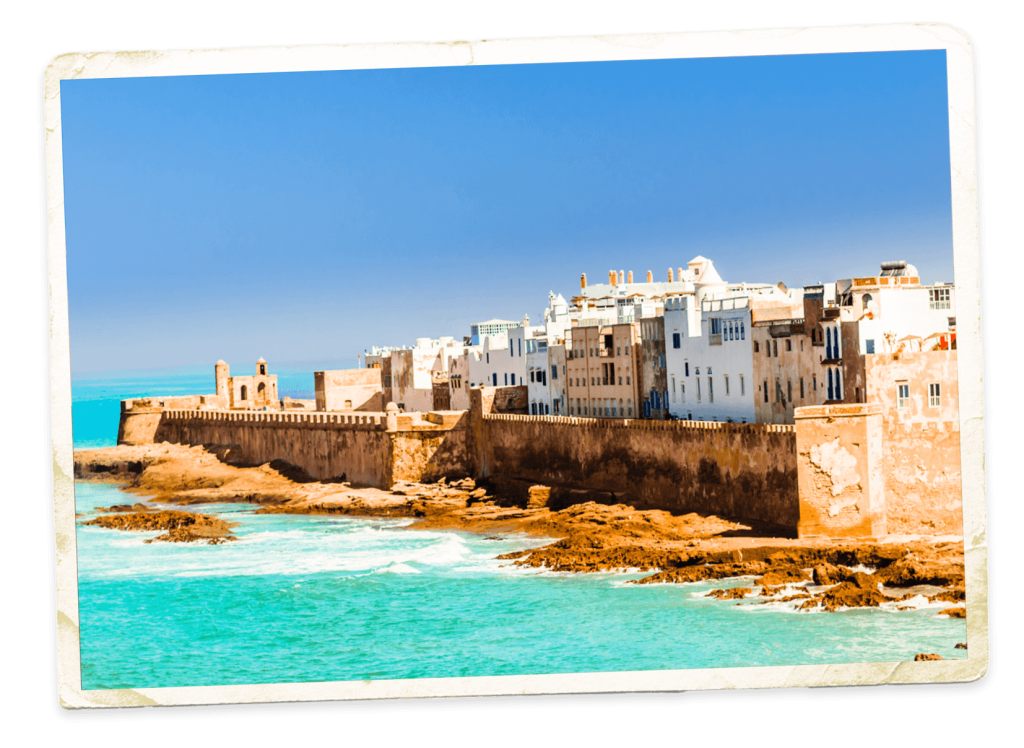
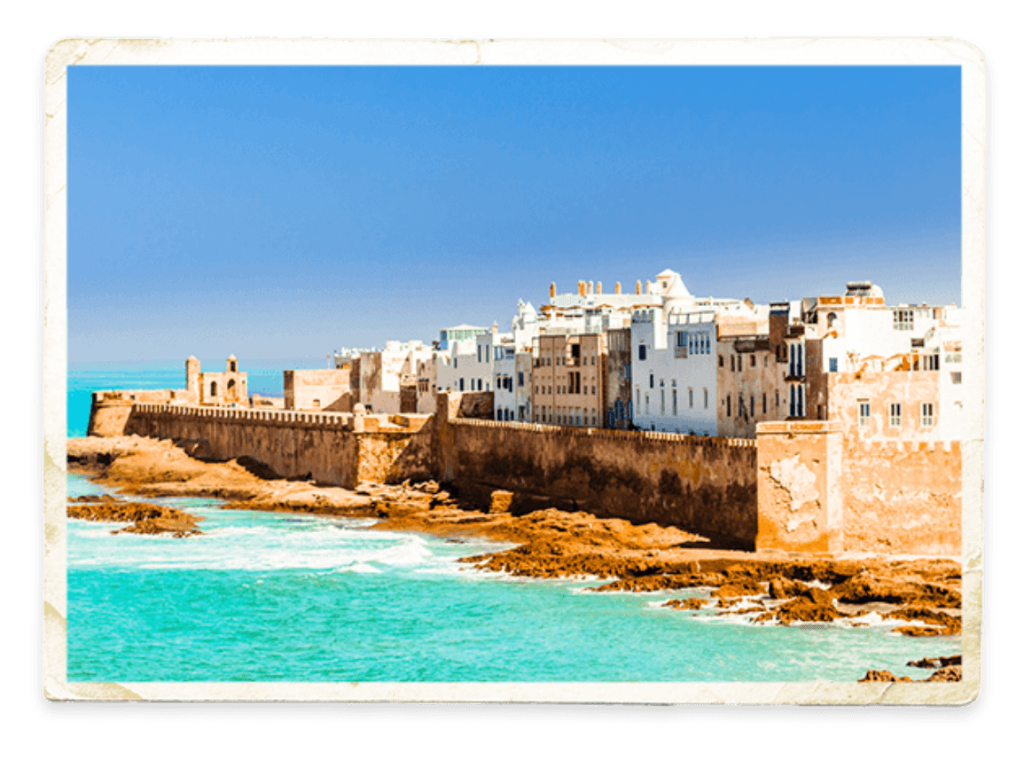
Picturesque Essaouira, attractively situated on Morocco’s Atlantic coast, is known for its rich history, charming medina, and vibrant arts scene. Essaouira’s delightful UNESCO world heritage 18th century medina (old town centre), tightly enclosed within high city walls and imposing sea-wall ramparts, is lined with an imposing battery of bronze cannons that once defended the city from sea invasions.
Exploring the medina reveals its markets, souks and residential quarters, including the Mellah (old Jewish district). The old town’s characteristic whitewashed buildings accented with bright blue shutters, create a relaxed, breezy, seaside charm.
The thriving local fishing port is a daily feast for the senses, with generational fishermen off-loading their daily catch while setting up impromptu markets and tending to their brightly painted small blue fishing boats safely moored and maintained behind them. Essaouira is also famous for its seafood markets and cafes, artisan shops and globally renowned annual Gnaoua World Music Festival – a joyous celebration of Morocco’s richly varied musically heritage alongside international artists.
Within easy reach of Marrakech, Essaouira’s refreshing sea breezes, laid-back atmosphere and blend of European and Moroccan history and architecture make it a favourite destination for travellers seeking classic Moroccan history, culture and relaxation. It is also q popular windsurfing and kitesurfing spot.
Fes (Fez)
Fes (Fez)
Fes, one of Morocco’s four imperial cities, originally founded in the 9th century, served as Morocco’s royal capital for over 400 years and is one of the world’s largest remaining medieval cities – a celebrated cornucopia of history and culture.
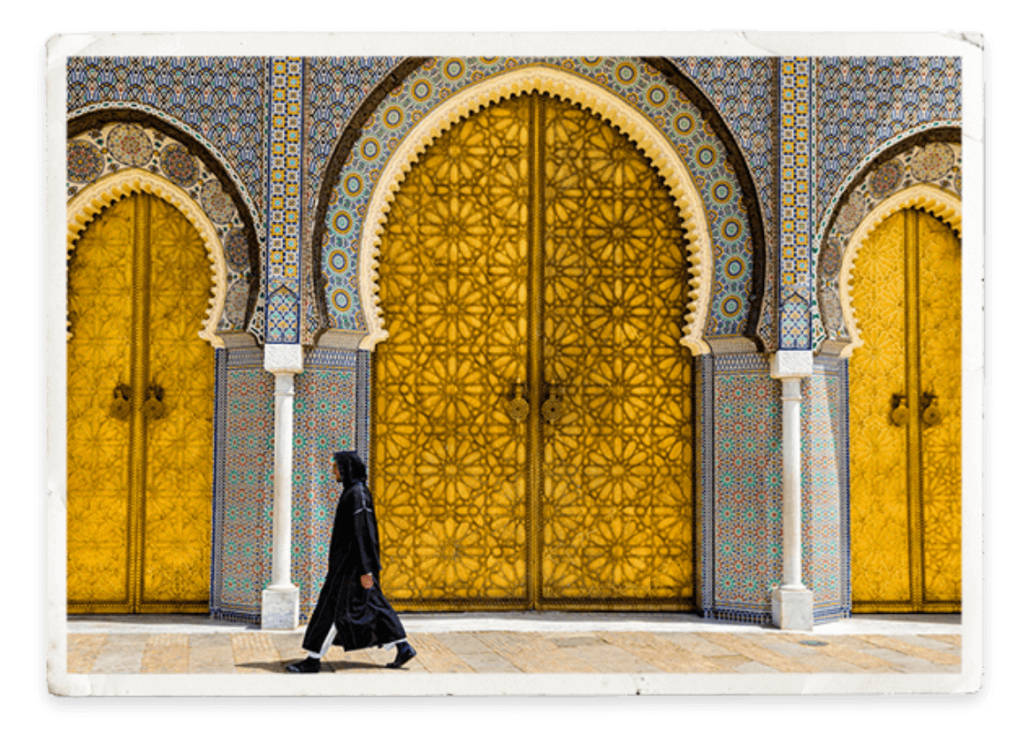
The UNESCO World Heritage old walled medina (old town centre) encompasses remarkable historical buildings showcasing exquisite architecture, including the 14th century Bou Inania Madrasa (medersa), Al Attarine Madrasa, Fes el Jdid Madrasa and the 9th century Kairaouine (Karaouyine) Mosque. Here you find its lively bazaars and souks, including the famous leather souk (Souk Ain Allou), the spices souk (Souk Attarine), and henna and kohl souk (Souk au Henne). The Dar el Makhzen (Royal Palace of Fes) showcases its enormous Marinid gate of Bab Dekakene, once the main entrance of the royal palace, and characteristic Mellah (old Jewish district). The late 16th century Borj Nord fortress overlooking the city offers panoramic views over Fes.
Nearby highlights include ancient Volubilis, Meknes and the Middle Atlas Mountains.
Ifrane
Ifrane
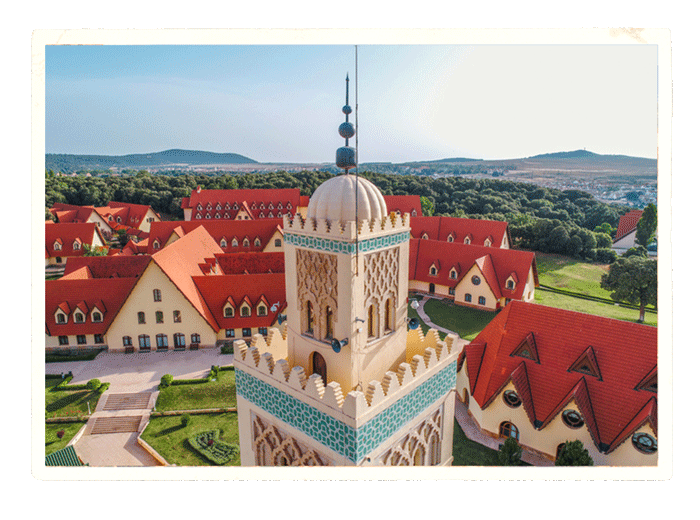
The Middle Atlas Mountain town of Ifrane is surrounded by forests of ceder and pine where you can find mature cedar trees, the largest reaching more than 30 meters in height. The surrounding mountain area is the native territory of the endangered indigenous Barbary macaques.
Owing to its location near Fez and Meknes, Ifrane became a favoured cool-climate retreat for French colonials during the early 20th century. Buildings constructed during this period reflect European-style architecture hence its pseudonym the “Little Switzerland” of Morocco. Along with the nearby Michlifen Ski Resort and the stunning Dayet Aoua Lake, Ifrane offers a unique blend of cultural history and natural beauty.
Larache
Larache
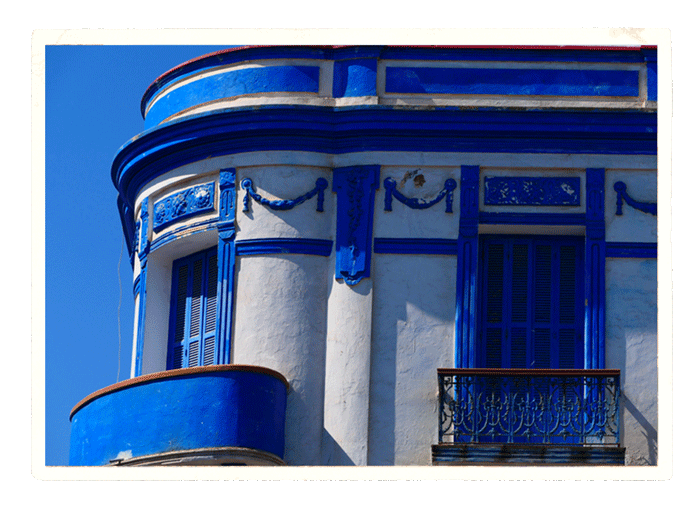
An Atlantic coast port city with a rich history dating to Phoenician times, Larache offers a relaxed atmosphere and a charming blend of Amazigh (Berber) and Spanish colonial influences. The old medina meanders down to the fishing port and Loukkos River below, while Spanish-style architecture dominates the colonial-era district.
The streets of the old medina (old town centre) meander down to the busy fishing port and Loukkos River below, while Spanish-style architecture dominates the colonial-era district.
Larache looks inland the ancient site of Lixus and is midway between Asilah (Assilah) and Moulay Bousselham’s renowned Merja Zerga National Park wetlands.
Lixus
Lixus
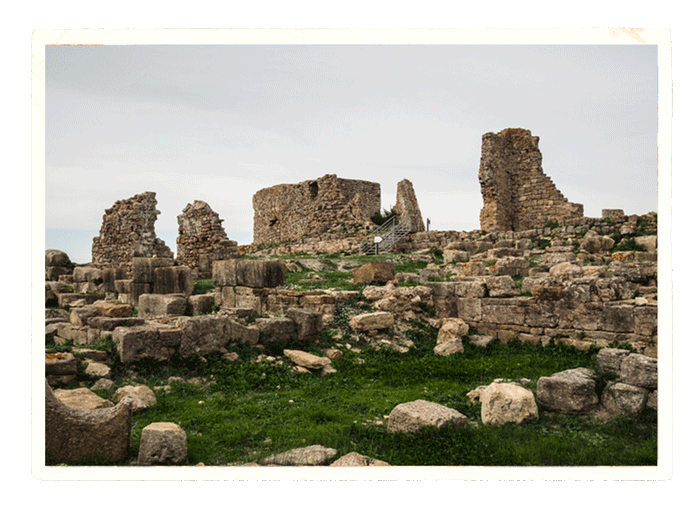
Lixus, offers a glimpse into Morocco’s deep and layered history. The roots of this ancient site date back to at least the 7th – 8th centuries BC when an important Phoenician trading settlement was established here. Subsequently, seized by the Carthaginians and then exploited and expanded under Roman rule around the 2nd century BC, Lixus is thought to be one of the legendary sites of the ancient Greek and Roman myth. Visitors can explore the ruins of ancient temples, the Roman amphitheatre, the impressive mosaic floors. Its hilltop location, which at one time sat atop an Atlantic coast port, provides panoramic views of the Loukkos River, the Atlantic coast port town of Larache, and the surrounding landscapes.
Marrakech (Marrakesh)
Marrakech (Marrakesh)
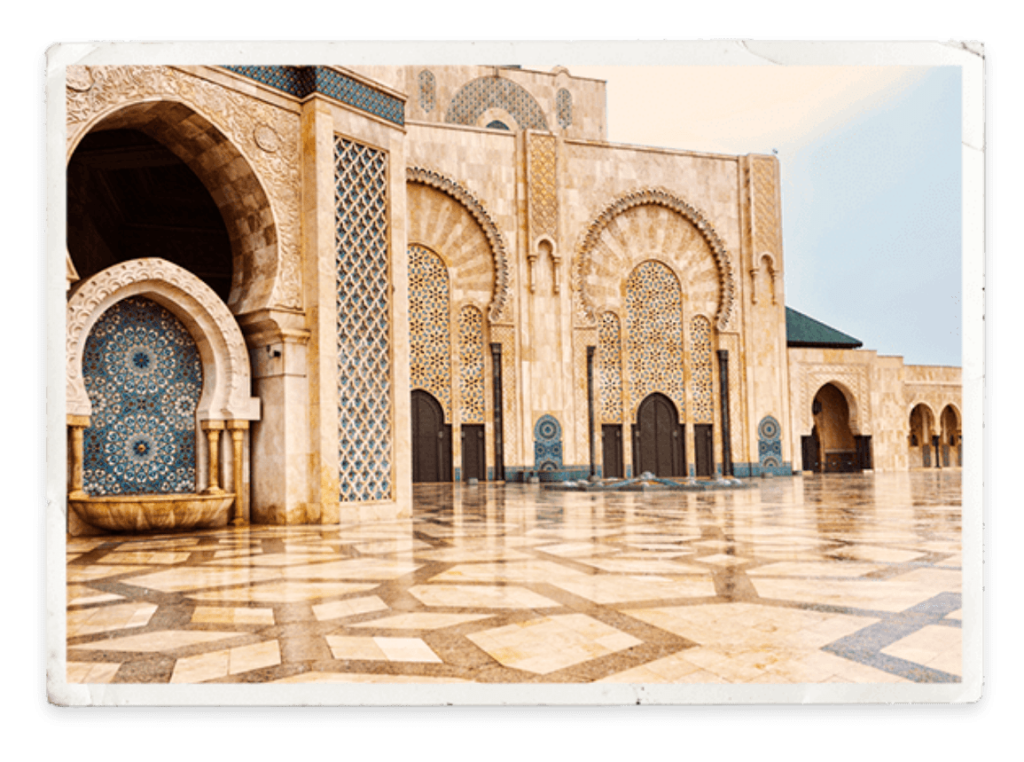
Known as the Jewel of the South, Marrakech evokes all that is exotic and rich about Morocco. This UNESCO World Heritage imperial city is famed for its red-walled medina (old town centre) alive over with glorious historic architectural wonders, including the 12th century Koutoubia Mosque, 16th century marvels such as the Saadian Tombs, El Badi Palace, and stunning Ben Youssef Madrasa, and glorious 19th – 20th century palaces showcasing classic Marrakeshi architecture, design and style, including the luxuriating Bahia Palace, and sumptuous Dar el Bacha Palace.
Bustling, colourful souks and markets offer everything from everyday essentials to intricate artisan works. The vibrant Djemaa el Fna Square buzzes with activity around its daily market stalls and is luminescent with open air cafes by night. Restful gardens, such as the historic Secret Garden, Majorelle Garden and Menara Garden which offer a peaceful respite from the city hub bub.
The soaring western High Atlas Mountains provide Marrakech with a stunning backdrop and access to scenic mountain villages and valleys. Remarkably, these mountains divide Marrakech from the from the fabulous Moroccan Sahara Desert which lies just on the other side of the mountains, making Marrakech a perfect gateway for desert adventures. Adding to the abundance of Morocco holiday possibilities, UNESCO World Heritage Essaouira lies within easy reach of Marrakech.
Meknes
Meknes
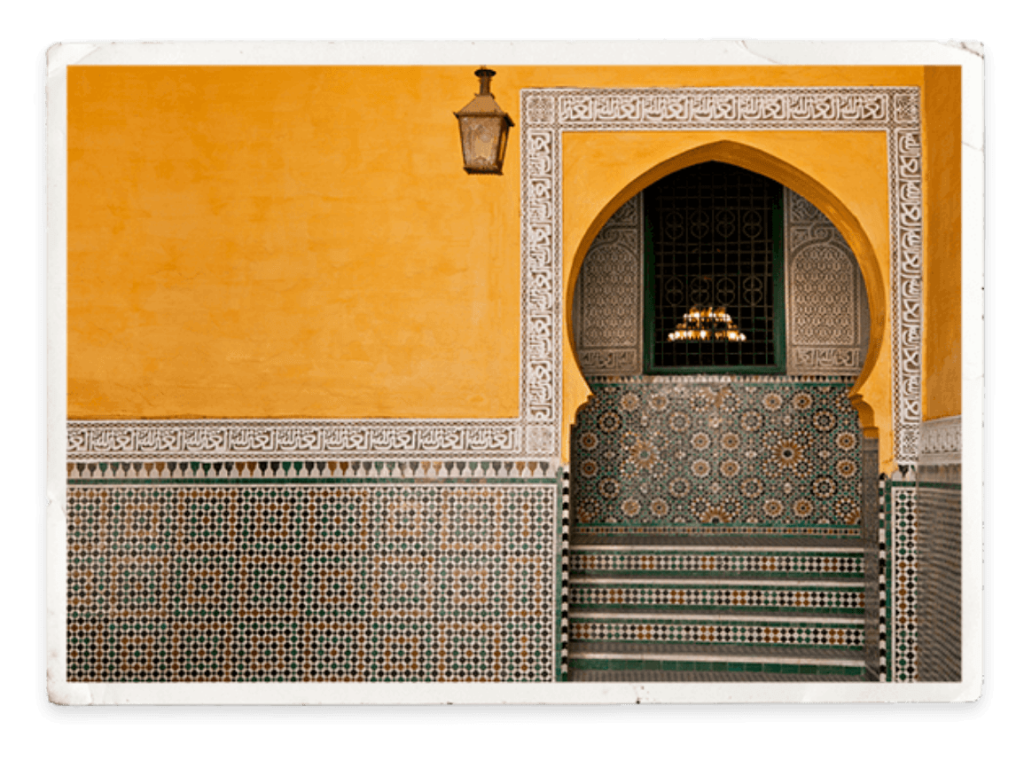
Meknes, a UNESCO world heritage site and one of Morocco’s four imperial cities has roots back to at least the 8th century when it is believed the area was first settled. By the 11th century Meknes had become an important base for the Sultan’s army. Its most significant transformation took place in the 17th century when the ruling Sultan, Moulay Ismail chose Meknes as his new imperial capital. His elaborate grand vision for his new capital earned Meknes its reputation as the “Versailles of Morocco.” Meknes’ control declined before the full splendour of his capital could be completed.
Glimpses of its past grandeur can be found in sites such as the colossal gate of Bab el Mansour, the 17th century main entrance to the imperial capital, the massive Heri es-Souani complex of granaries, the Agdal Basin and royal palace – Dar el-Makhzen.
Meknes lies within easy reach of three UNESCO World Heritage sites: the ancient Roman capital of Volubilis, and the Moroccan imperial cities of Fez and Rabat; as well as the Middle Atlas Mountains.
Merzouga
Merzouga
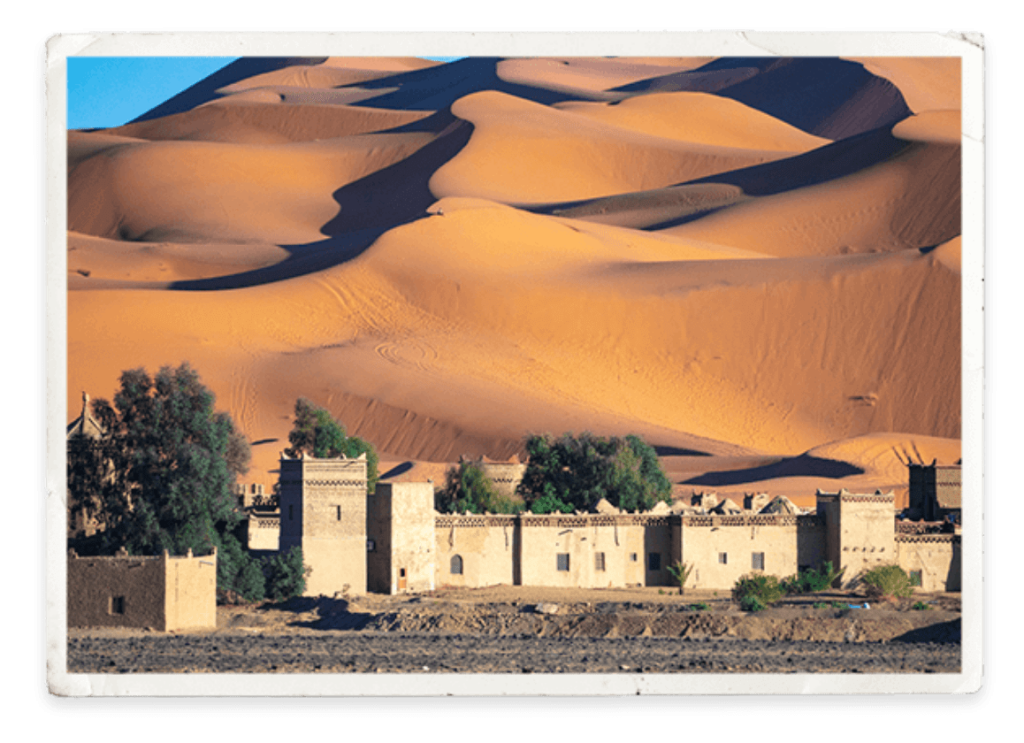
The culturally fascinating desert oasis village of Merzouga is situated on the edge of the spectacular Erg Chebbi Sahara Desert sand dunes, the highest, most photogenic sand dunes of Morocco’s desert. Home territory of the Amazigh (Berber) nomad Blue Men, some of whom are permanently settled in small oasis villages scattered throughout this beautiful desert area, the Merzouga area is the premier staging point for desert camp experiences and desert camel rides into the glorious soaring Egi Chebbi sand dunes.
The village centre is populated with traditional desert buildings constructed using mud bricks and rammed earth. Deeply ingrained in their desert culture, the Amazigh (Berber) of the desert area are famous for their generous hospitality, traditional dances and music emphasising drums and tikarkachine (metal like castanets) intertwined with song.
Visitors can also explore the ancient ksars (fortified village) such as Taous (Taouz) and the surrounding desert landscapes.
Midelt
Midelt
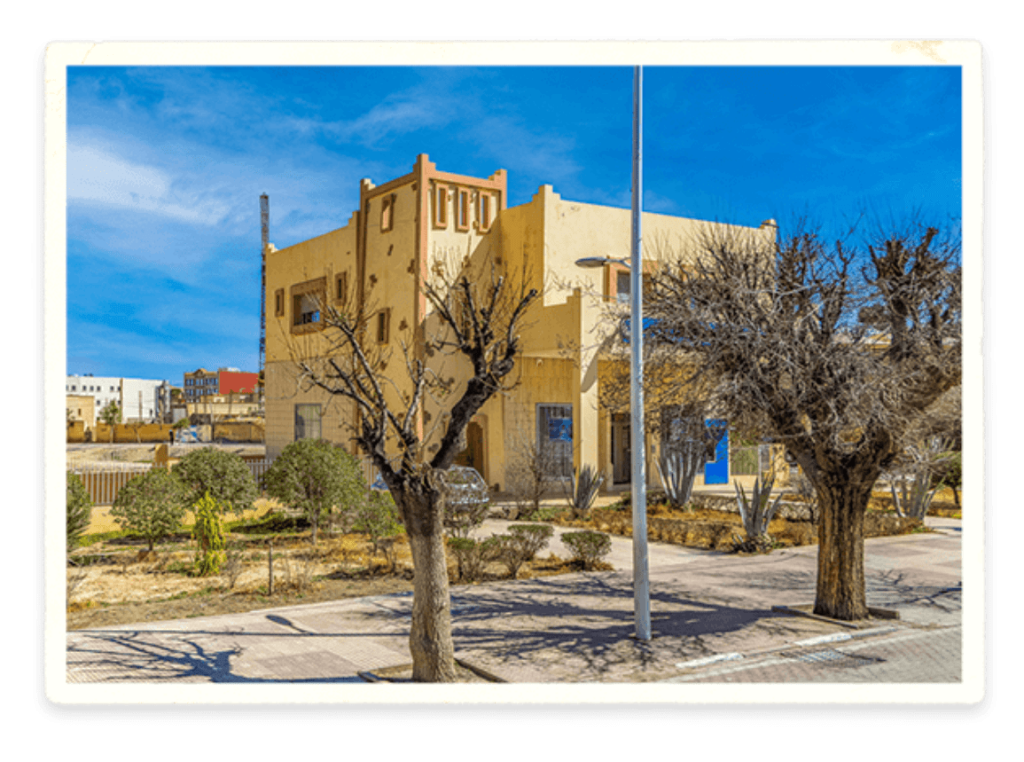
The high plains town of Midelt lies between the Middle and High Atlas Mountains on the road from Fes in the north to Errachidia and Erfoud in the south. With its favourable high altitude environment, Midelt has evolved into the capital of Morocco’s apple industry a central base for nature enthusiasts who wish to explore the region, particularly its bird populations, and a restful stop for travellers wishing to break their journey between Fez and the Sahara Desert.
N’Kob
N’Kob
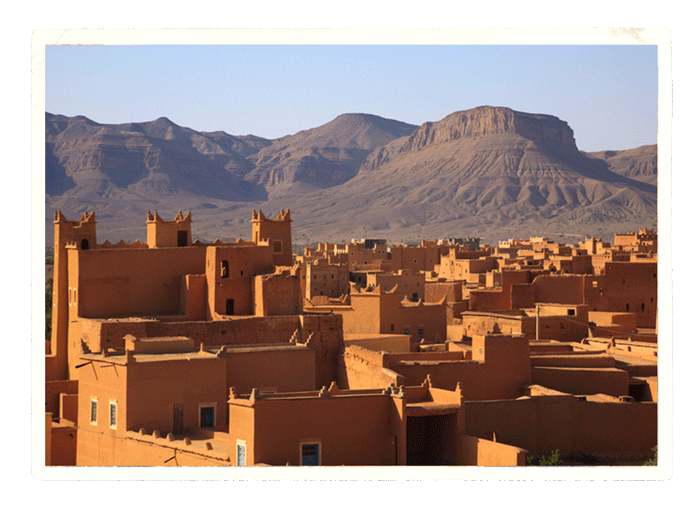
N’Kob, a charming Amazigh (Berber) town nestled near the Draa Valley of Morocco is known for its 45 traditional mud-brick kasbahs and serene date palm-filled oases. Historically it served as an essential stop for caravans traveling between the Sahara and Marrakech. Be captivated by the ancient kasbahs, the verdant oases, and the deep-routes Amazigh (Berber) culture that permeates the village, offering a unique glimpse into Morocco’s rich and diverse heritage.
Ouarzazate
Ouarzazate
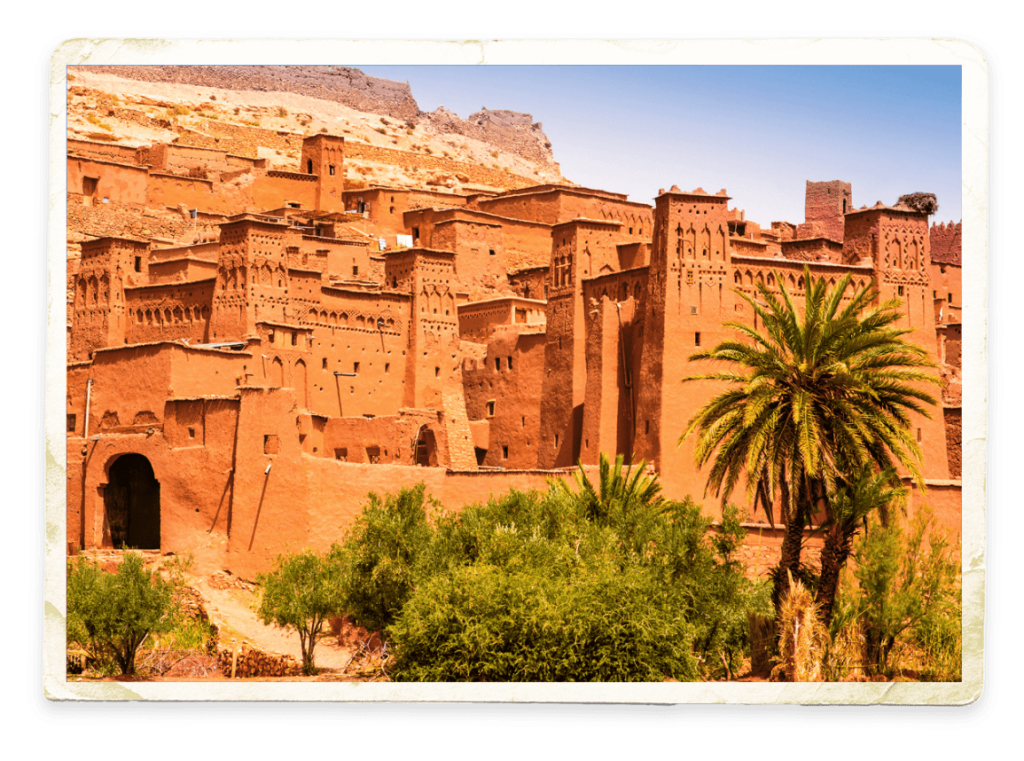
Strategically located on the cross-roads of an old caravan trading route and cradled between the High Atlas Mountains and Anti-Atlas Mountains, the oasis town of Ouarzazate is renowned as the Gateway to the Desert. Ouarzazate captures the stunning, dramatic contrasts of the Moroccan Sahara Desert: a life-giving green oasis surrounded by soaring mountains peaks (often snow-capped in winter), steeped in desert traditions and arresting desert architecture.
The imposing historic Glaoui Taourirt Kasbah with its towers, oriel windows, and defensive walls looms over the oasis –all the more remarkable given it is built from rammed earth and mud brick – a marvellous example of classic desert architecture. Nearby are remnants of a French Foreign Legion garrison from the French colonial period.
It’s remarkable setting has seen the area repeated sought after and featured in major films and television productions including Game of Thrones, Kingdom of Heaven, Gladiator, Star Wars, Kundun, Alexander and Lawrence of Arabia all of which were made in this area.
Ouarzazate is easily accessible from Marrakech and serves as both the gateway to the desert and the perfect base for exploring Morocco’s southern desert treasures – Skoura, Tinghir (Tinerhir), Todra Gorge, Dades Gorge, Fint, Zagora, the Roses Valley and Road of a Thousand Kasbahs. With a longer stay travellers can venture to more desert highlights including Merzouga and the beautiful Erg Chebbi sand dunes, Erfoud, Taous (Taouz) and the Ziz Gorge.
Ouzoud
Ouzoud
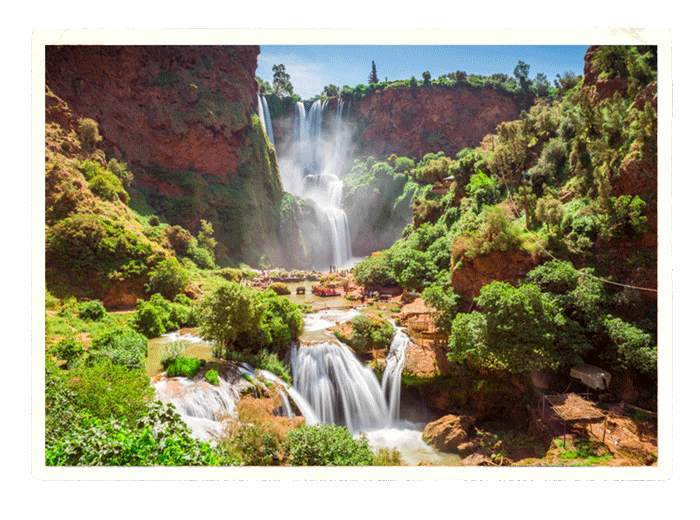
Ouzoud, tucked into the western-most reaches of the Middle Atlas Mountains, is renowned for its stunning 110-meter-high triple tiered waterfalls, among the highest in North Africa. The name “Ouzoud” refers to the olive trees surrounding the area. The site has been a natural gathering point for locals and travellers, offering breathtaking views, traditional mills, and opportunities to observe Barbary macaques in their natural habitat.
Rabat
Rabat
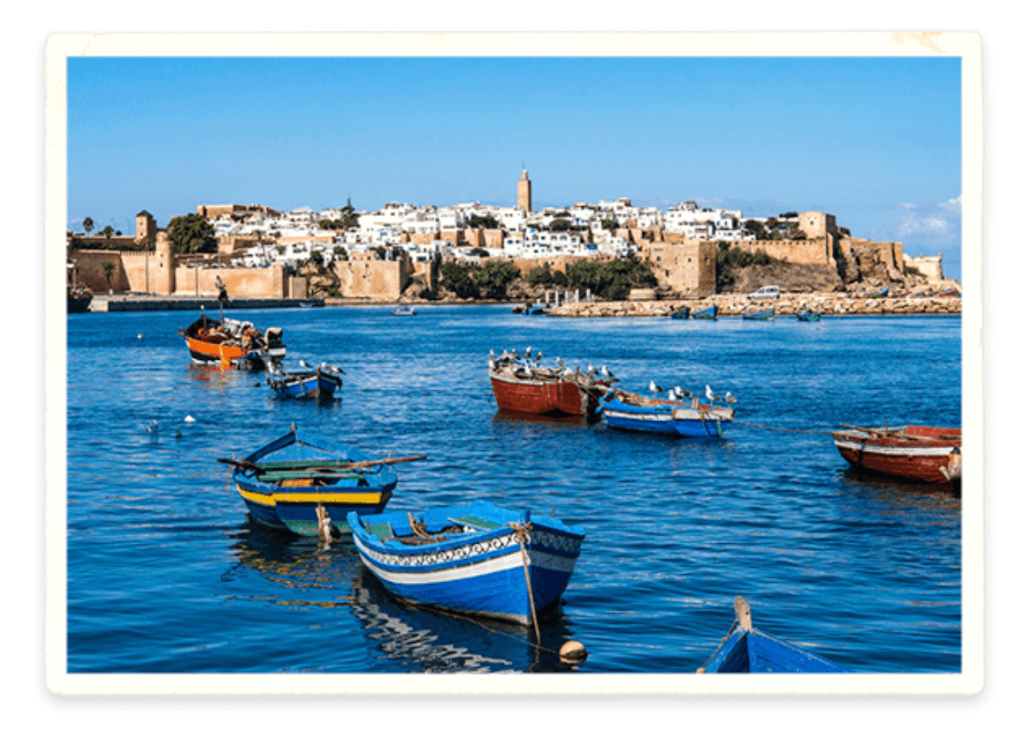
Rabat is one of the four imperial cities (together with Marrakesh, Fez and Meknes) and the capital of the kingdom. Spilling out along the southern banks of the Bou Regreg River where it empties into the Atlantic Ocean, Rabat is a UNESCO World Heritage Site.
Rabat is a celebration of magnificent historical sites married seamlessly with the contemporary. From the striking 17th century Oudaya Kasbah ramparts commanding panoramic views over the river and ocean and incorporating 12th century roots, and the peaceful Andalusian garden, to the 12 century Hassan Tower, the beautiful Mohammed V Mausoleum with its imperial guards, the Royal Palace (Mechouar) and the medieval Necropolis of Chellah, situated within the ruins of the ancient Roman town of Sala Collonia.
This rich history is complemented by the Museum of Modern & Contemporary Art and lush gardens.
Rissani
Rissani
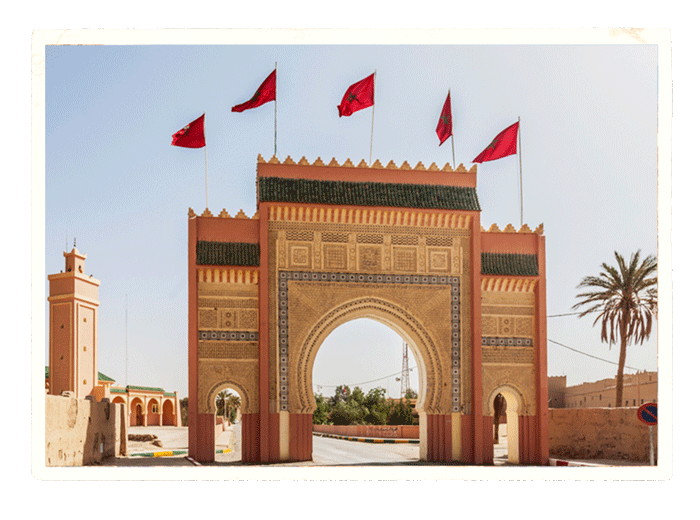
Rissani, located between Erfoud and Merzouga in the Moroccan Sahara Desert, is steeped in history. Once the site of a fabulous medieval city state, it is the 17th century birthplace of the Alaouite dynasty, as reflected in its Mausoleum of Moulay Ali Cherif, the founder of the dynasty. Its bustling souks offer a glimpse into traditional Moroccan desert life.
Sefrou
Sefrou
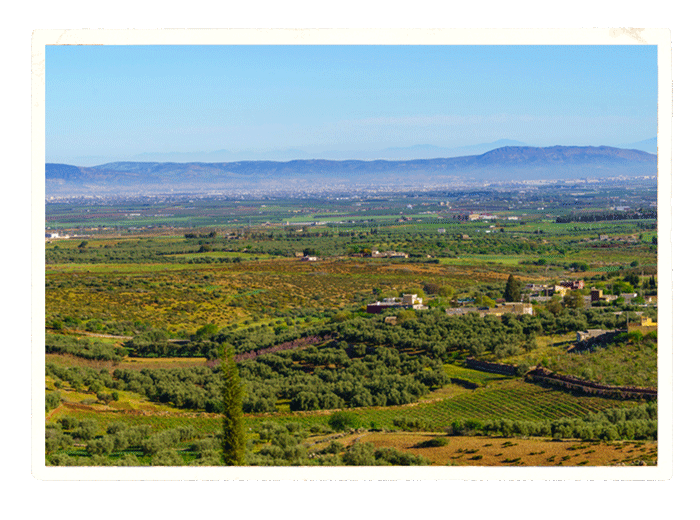
Sefrou is located in the foothills of the Middle Atlas Mountains and within easy reach of Fes, has a history dating back to the 9th century. Highlights include the charming old walled medina with its relaxed streets and ancient Mellah (Jewish district) and the annual 3-day Cherry Festival celebrating the area’s natural beauty and culture, which is recognised by UNESCO for its national cultural importance.
Skoura
Skoura
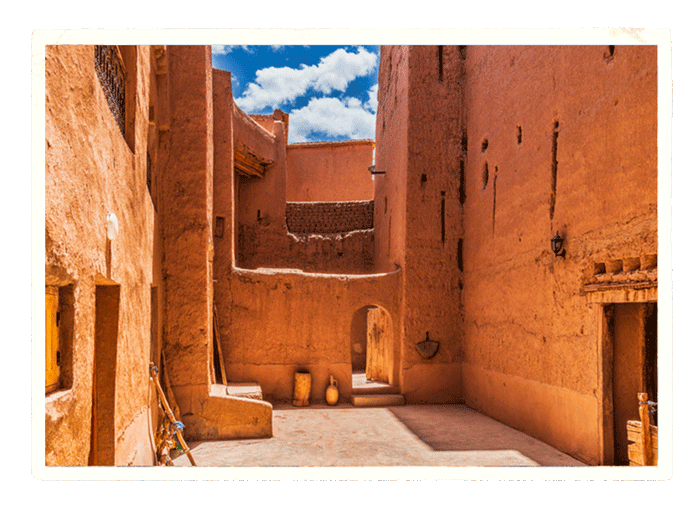
Skoura, an oasis village in the Ouarzazate region, is famous for its historic kasbahs scattered throughout the extensive Skoura oasis, including the 17th century Kasbah Amridil. The village’s roots date back to around the 12th century. The Skoura oasis area flourished thanks to its strategic location on the caravan routes, with a local population that historically included Moroccan Amazigh (Berber), Jewish and Arabic people. The lush oasis area is filled with extensive date palms and olive groves.
Tafraoute
Tafraoute
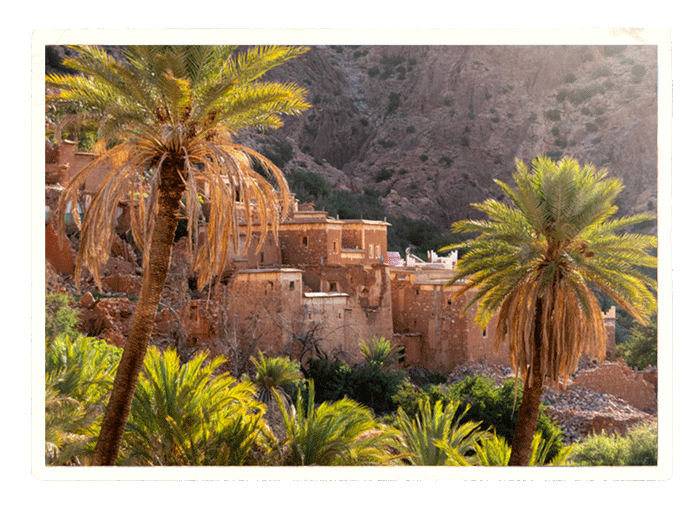
Tafraoute, nestled in the Anti-Atlas Mountains, is renowned for its stunning rock formations and traditional Berber culture. Established centuries ago, the town offers a glimpse into Morocco’s Amazigh (Berber) indigenous history. Nearby highlights include the beautiful Ait Mansour Gorge and the Painted Rocks, crafted by Belgian artist Jean Verame. Further afield is Agadir Id Aissa, an ancient fortified granary and the interesting Amazigh (Berber) town of Tiznit . Each year Tafraoute celebrates the annual almond harvest with its almond blossom festival, a vibrant celebration of local heritage.
Tangier (Tanger)
Tangier (Tanger)
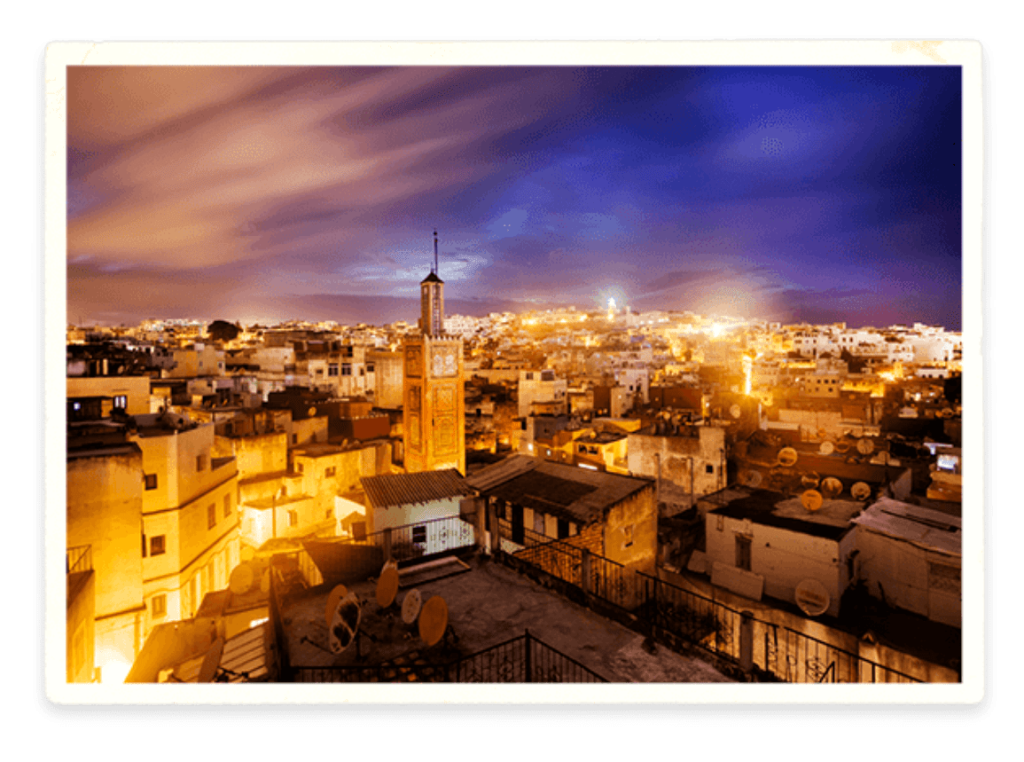
Resting on the southern shores of the Gibraltar Strait, Tangier stands within sight of Europe yet is a world apart. Every footstep is steeped in the fabled history of the ancient and modern worlds. This Amazigh (Berber) land, a crossroads of history, has been shaped by waves of Phoenician, Punic, Roman, Arab, and European presences. With its 18th century Kasbah palace, Dar el Makhzen, perched overlooking the charming hillside medina, the faded elegance of Spanish colonial era buildings and sweeping views over the Mediterranean waters, Tangier has long held a magnetic allure for explorers, traders, conquerors and expansionists, as well as artists, writers and travellers.
Tetouan, Chefchaouen, Cape Spartel, Hercules Cave, Asilah and Morocco’s beautiful Mediterranean coast lie within reach of Tangier. Daily ferries connect Morocco and Spain.
Taous (Taouz)
Taous (Taouz)
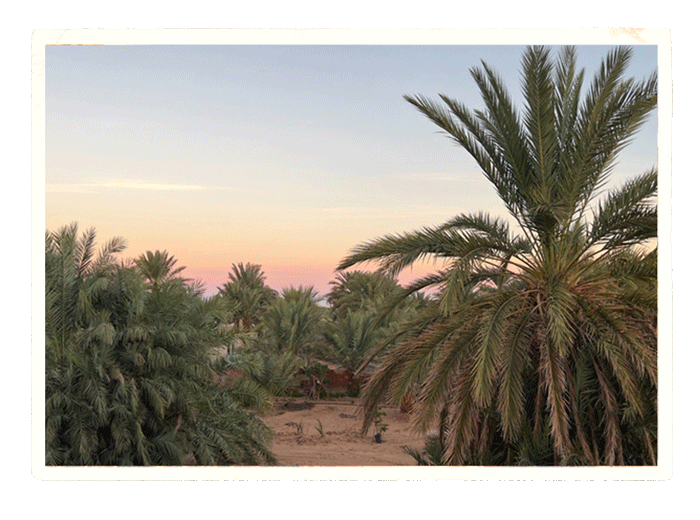
Taous, also known as Taouz, is a small village situated near Merzouga and the Erg Chebbi sand dunes of the Moroccan Sahara Desert. The old kasbah village has ancient with the area acting as a waypoint for ancient caravans and nomads travelling through the Sahara.
Taroudant
Taroudant
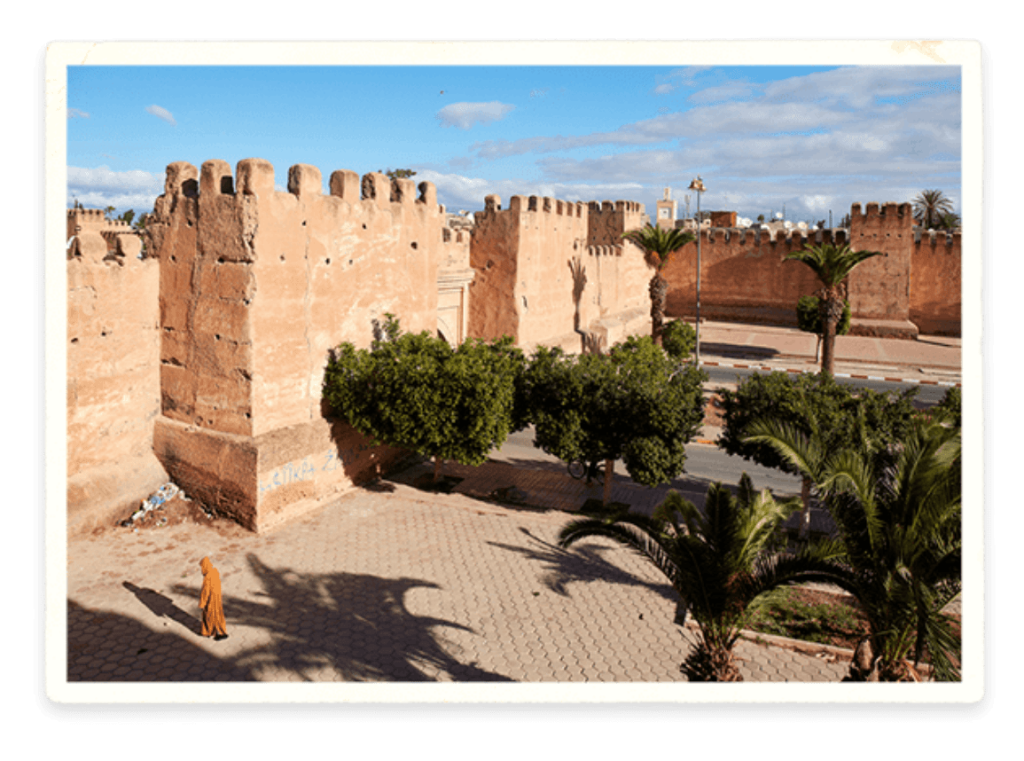
The Souss Valley town of Taroudant lies at the crossroads of old camel caravan routes: to the north, Marrakech, to east, Ouarzazate in the Moroccan Sahara, and the Atlantic coast port of Agadir to the west.
Often called “little Marrakech” with echoes back to at least the 11th century, Taroudant’s historic old medina (old town centre) is enclosed by a striking 16th century 7.5 kilometre long wall.
Tetouan
Tetouan
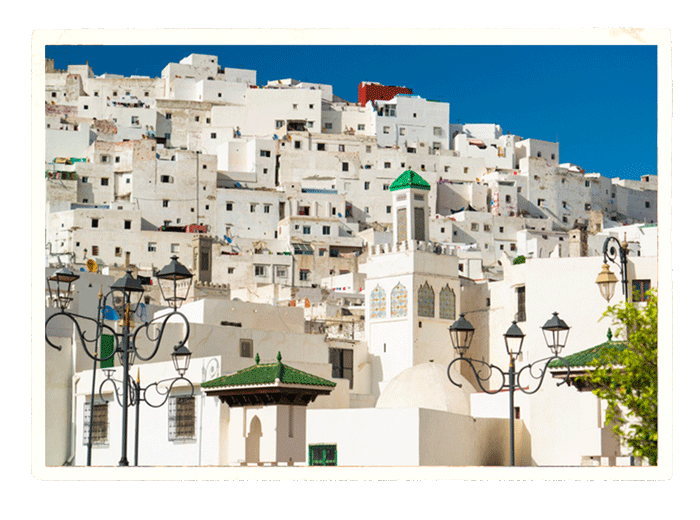
Tetouan in ancient times was an Amazigh (Berber) capital before being annexed by the Romans. At the time it was an important port town linking Mediterranean commerce and cultural exchange between Africa, Europe and Middle East. During the early middle ages it was a launching point for incursions into Andalucia and later a safe haven for Andalusian refugees, persecuted Muslim and Jews, expelled from Spain. Its more recent history includes being seized by the Spanish in the late 19th and early 20th centuries. Today, evidence of this rich and varied history is reflected throughout the city area – a UNESCO world heritage site. The old Kasbah palace (partially restored) perched high upon a hillside overlooks the old city walls, medina (old town centre), classic architecture of the Spanish colonial period, and out to the Mediterranean and the Riff Mountains.
Tetouan lies within easy reach of Tangier, Chefchaouen, Cape Spartal, Hercules Cave, Asilah and Morocco’s beautiful Mediterranean coast.
Tinghir (Tingehir or Tinerhir)
Tinghir (Tingehir or Tinerhir)
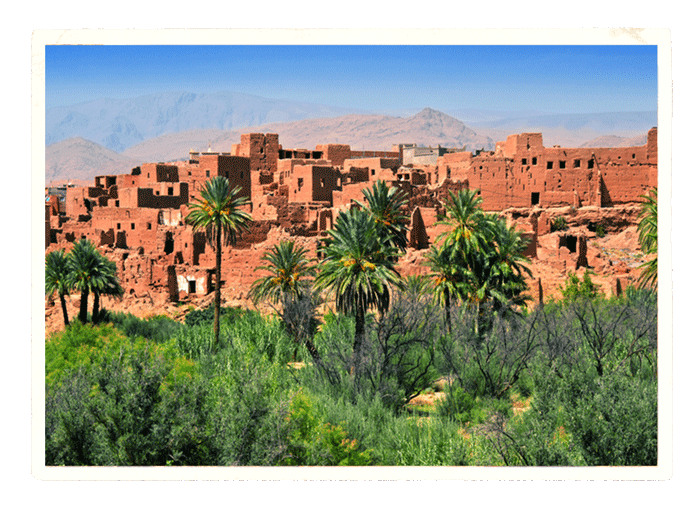
The Sahara Desert town of Tinghir, gateway to the beautiful Todra Gorge, is dramatically set at the foot of the eastern High Atlas Mountains where the Todra River emerges from the mountains into the verdant Todra Oasis.
An important respite for ancient camel caravans, the traditional mud-brick kasbahs of the Moroccan Sahara reflects the natural beauty and rich cultural legacy of the area.
Tinghir is located roughly midway between Ouarzazate and Erfoud.
Tiznit
Tiznit
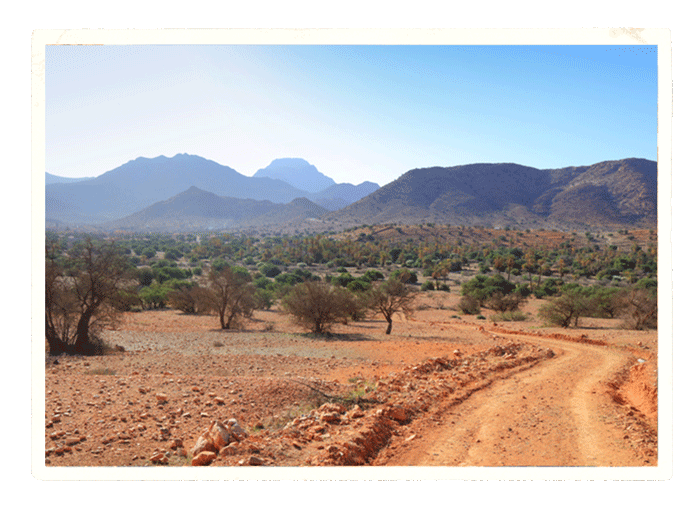
The charming walled town of Tiznit located close to the Atlantic coast in the Souss Valley area, is renowned for its proud Amazigh (Berber) heritage, exquisite traditional silver jewellery, and an intriguing old mosque minaret with projecting wood pylons in the upper section. An important water source for nomads who first settled in the area, during the late 19th century the town flourished as a military base for Sultan Hassan I.
Tiznit lies within reach of Agadir, Taroudant and Tafraoute and the Anti-Atlas Mountains.
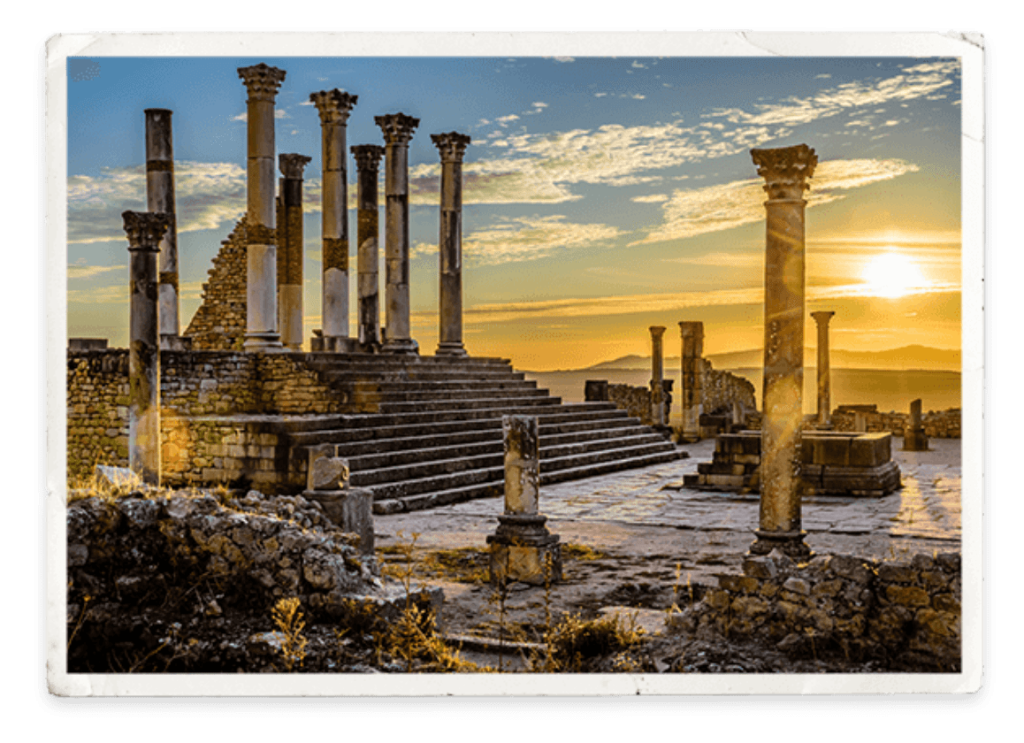
Volubilis
Volubilis
Volubilis is one of Morocco’s ancient treasures. A once great ancient Roman capital, this UNESCO World Heritage Site, offers a vivid portal into Morocco’s classic Roman past. Located on a hillside overlooking a fertile valley, the site contains marvellous well-preserved mosaics floors and the remains of many significant buildings including the Basilica, Thermae, Temple of Jupiter, Capitol, and Triumphal Arch.
Volubilis is easily reached from the Morocco’s imperial cities of Meknes, Fez and Rabat.
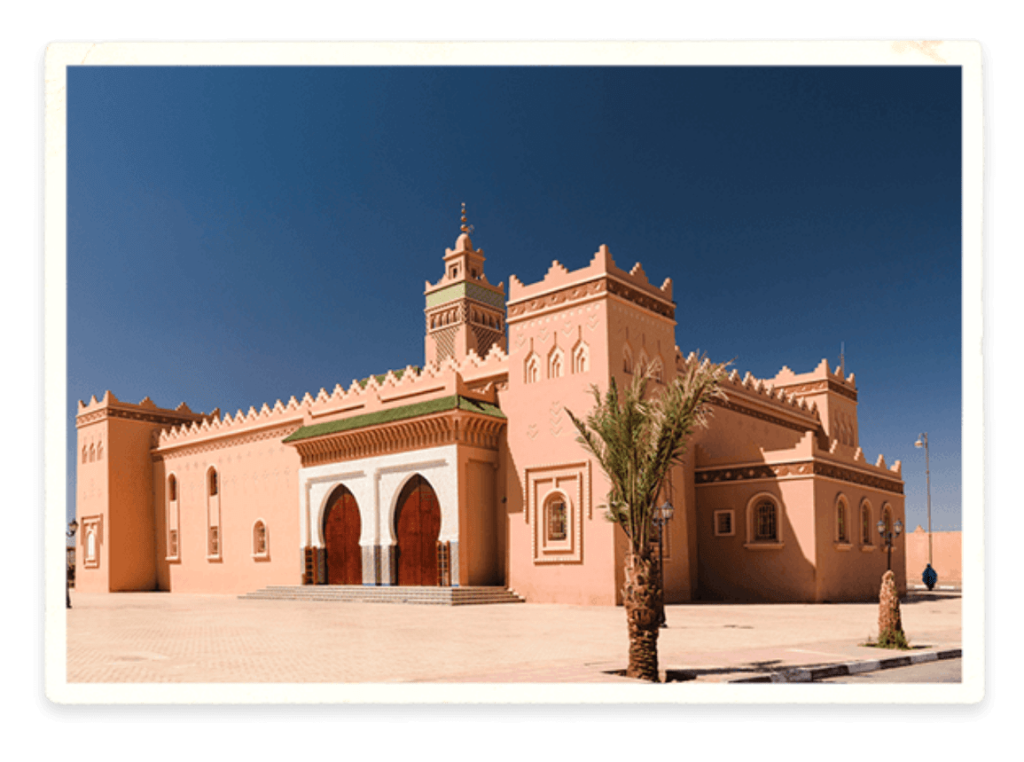
Zagora
Zagora
The old Berber oasis camel caravan town of Zagora is located in the south-east of Morocco in the Draa Valley. Situated among the date palm groves and oasis of the Draa Valley, Zagora was a stopping point on the ancient desert camel caravan route. Famously, Zagora claims, as indicated by a sign posted in the town, it is 52 days (by camel) from Timbuktu, Mali.
Morocco’s Natural Heritage: The Mountains, Valleys, Gorges & More
Atlas Mountains
Atlas Mountains
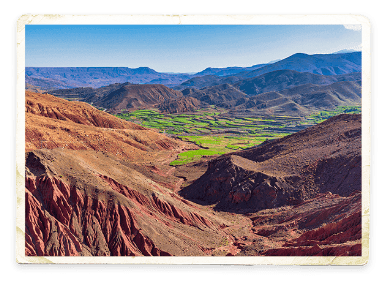
The Atlas Mountains of Morocco stretch over 2,500 kilometers, offering a breathtaking backdrop to the country’s diverse landscapes. This majestic range is divided into three…
Anti Atlas Mountains
Anti Atlas Mountains
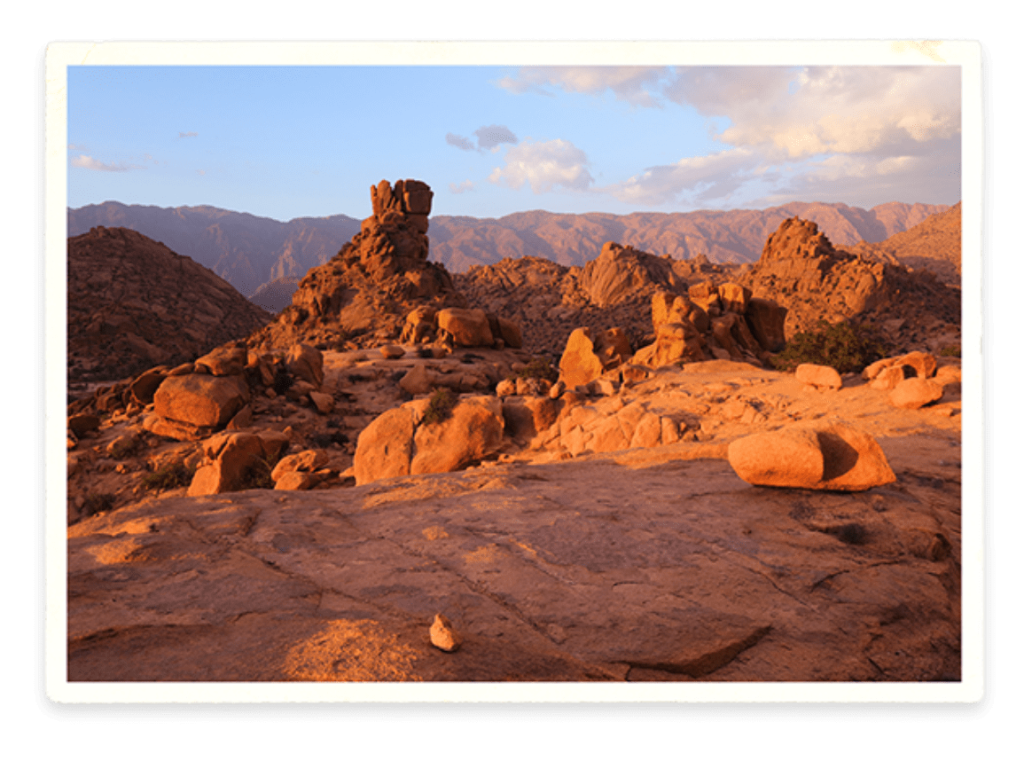
The Anti-Atlas Mountains lie in southern Morocco, reaching peaks of 2,500 to 2,700 meters. This ancient and extraordinary mountain range runs roughly in tandem with and parallel to the High Atlas Mountains: extending from the Atlantic coast between Tiznit and Sidi Ifni, to the Tafilalt oasis near Erfoud in east.
Together with the Atlantic Ocean and High Atlas, the Anti-Atlas create a costal pocket carefully sheltering the lush Souss Valley from encroachment by the Sahara Desert. Further east, the High Atlas Mountains and Anti-Atlas ‘ eastern edge – the dramatic, rugged Jbel Saghro Mountains – sandwich narrow sliver of Morocco’s most northwestern Sahara Desert section, crafting a dramatic natural fortress around the Ouarzazate, Boumalne Dades, Tinghir and Tinejdad areas.
The Amazigh (Berber) of the Anti-Atlas are deeply proud of their enduring tribal heritages – from the Tafroute & Ait Mansor area, where houses typically bear painted Amazigh characters and patterns to the tiny Amazigh villages dotted throughout the nooks and crannies of the rugged terrain of the Jbel Saghro region. s
High Atlas Mountains
High Atlas Mountains
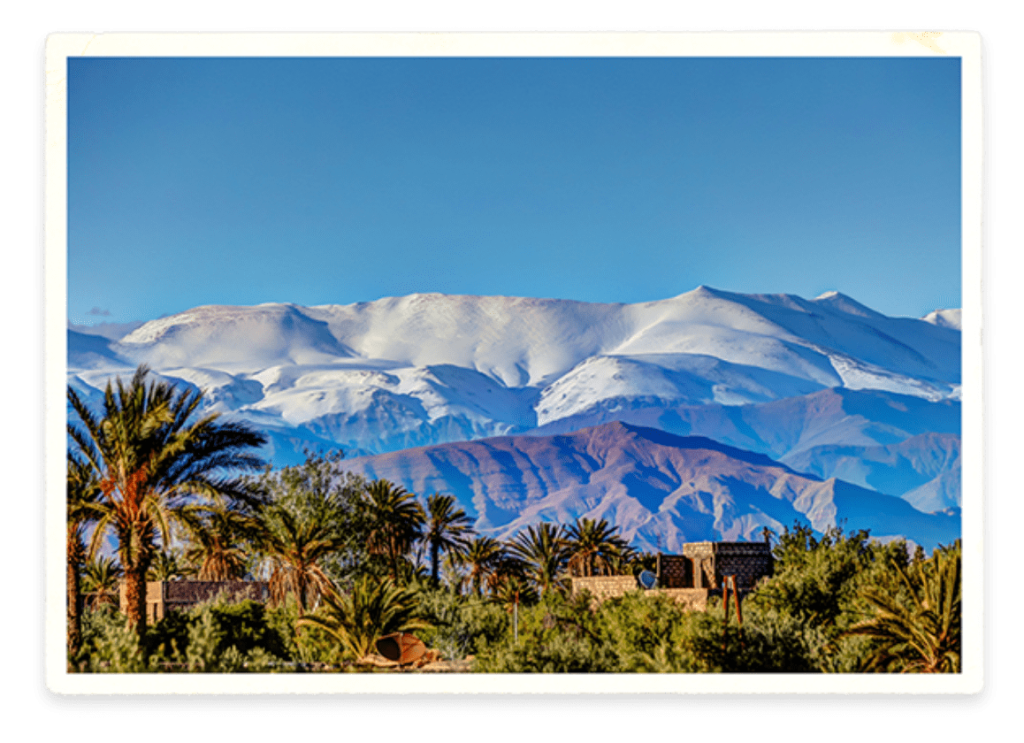
Situated in central Morocco, the scenic High Atlas Mountain range is the highest and most expansive of Morocco’s mountain chains. These mountains act as a powerful natural boundary, separating the Sahara desert from the central and northern regions of Morocco. Over millennia, the geographic challenges and climatic impact of the High Atlas has fostered and shaped the rich and uniquely distinctive individual cultural traditions of the peoples of the desert, mountains, central and northern Morocco.
Dissecting the country, this vast mountain range unfurls its soaring prehistoric rocky spine north-easterly across more than 2,000 kilometres from the Atlantic coast between the Essaouira and Agadir, Marrakech and Ouarzazate, Midelt and Er-Rachadia regions to the Moroccan – Algeria border and Aures Mountains.
Towering over 4000 meters, the highest High Atlas peaks are found in the western High Atlas area close to Marrakech and Ouarzazate. The highest being the 4167m Jbel Toubkal, both the highest of the High Atlas and the highest peak in Morocco. For more than a thousand years the 2260 meter Tizi n’Tichka pass – the highest of Morocco’s mountains passes – has linked Marrakech to Ouarzazate and the Sahara Desert. For countless generations, the hardy Amazigh (Berber) people of the High Atlas have lived in homes and villages of constructed from the bountiful rocks of their natural environment.
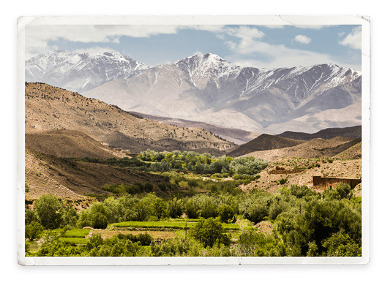
Middle Atlas Mountians
Middle Atlas Mountians
Morocco’s Middle Atlas Mountains rise in central Morocco and extend in a north-easterly direction for around 460 kilometres from their south-western terminus adjacent to the central High Atlas Mountains and Beni Mellal, between Meknes and Fes in the north and the more southerly Midelt plateau area, towards Taza, Guercif and Moulouya River in the northeast.
Reach heights of up to around 2,400 meters, the Middle Atlas Mountains, have extensive cedar forests and provide a native habitat for Morocco’s indigenous Barbary macaque. The cedar forests are said to be the largest southern Mediterranean forest and a rare remnant of a once-vast forest ecosystem stretching across Northern Africa, Spain, Turkey and Lebanon.
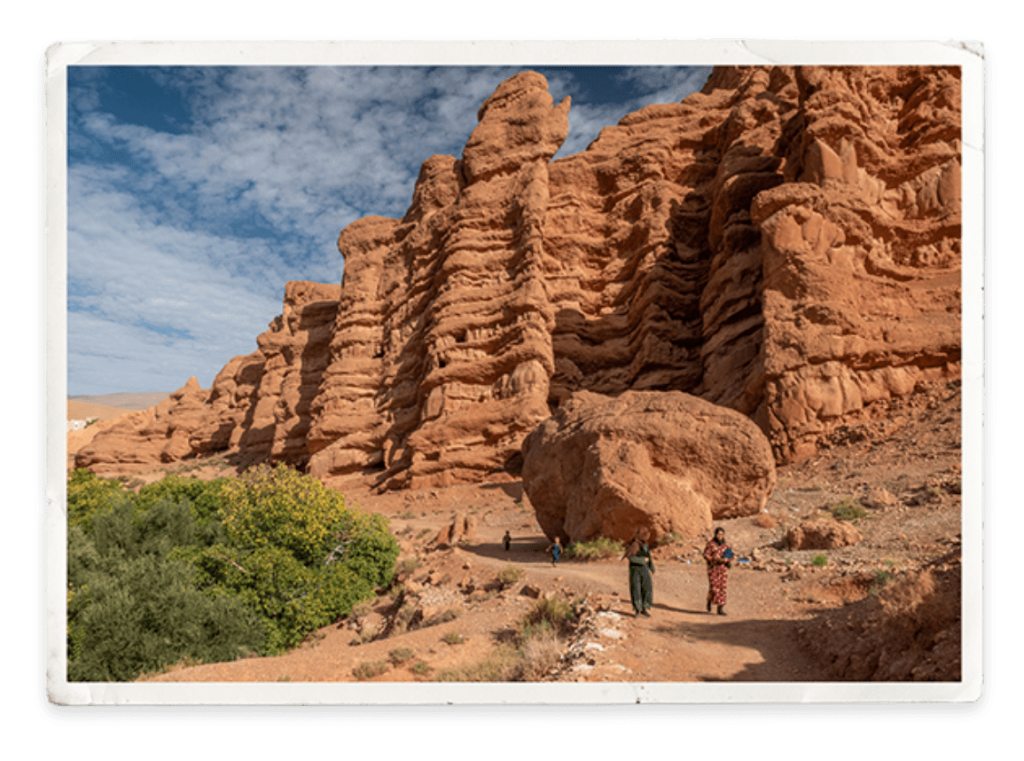
Dades Gorge & Dades Valley
Dades Gorge & Dades Valley
The landscape of the Dades Gorge is unique and hauntingly beauty. Over eons the Dades River has carved through the eastern High Atlas Mountains sculpting the incredible and surreal red rock formations lining the gorge. From Amazigh (Berber) ksars (fortified villages), the striking Monkey Fingers rock formation, to the serpentine hairpin road leading to panoramic viewpoints, the gorge showcases the breathtaking wild beauty of the Moroccan landscape.
At the gorge’s southern extremity, the Dades River tumbles from the Mountains into the Sahara Desert’s Dades Valley. The lush valley soils of this region of the Dades Valley are richly populated with palm, fruit and nut tree groves palm. Here where the Sahara Desert and High Atlas Mountains merge, is the Amazigh (Berber) market town of Boumalne Dades, the gateway to Dades Gorge.
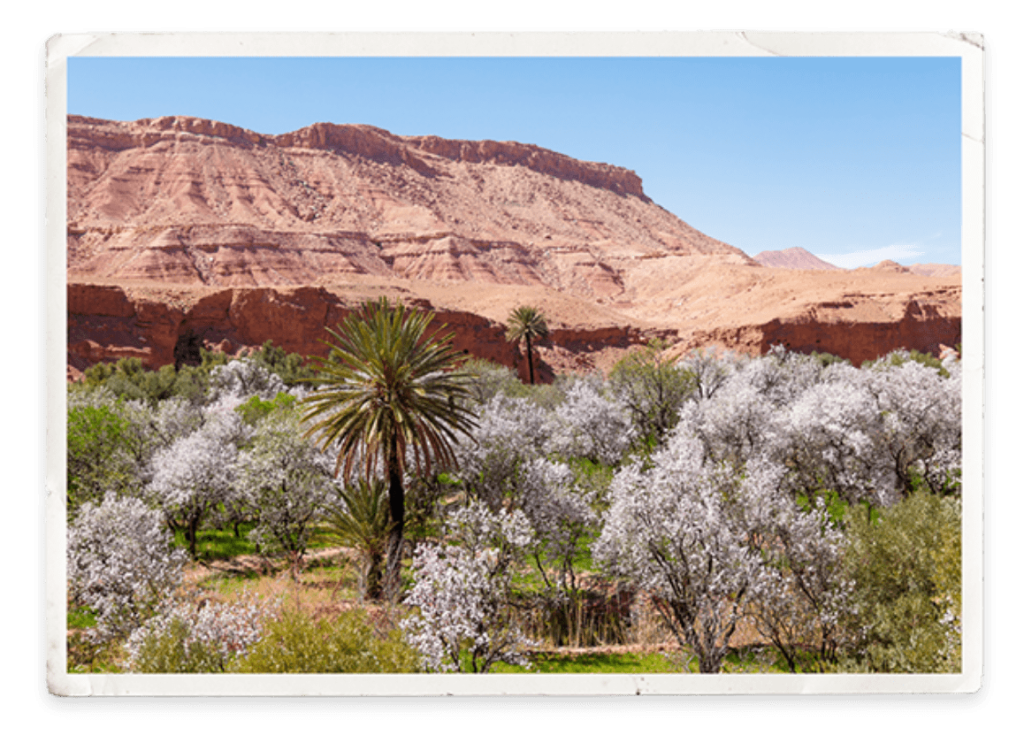
Draa Valley (D’ra Valley)
Draa Valley (D’ra Valley)
The verdant D’raa Valley is renowned for its many Kasbahs and its oases of dates, figs and henna. Originating in the Jbel Saghro Mountains extremity of the Anti-Atlas Mountains, south of Ouarzazate, the ancient D’raa River, the longest river in Morocco, has hewn the Valley out of the mountains and desert landscape.
Between Adgz and Zagora the beautiful date palm groves of the Draa Valley spill out like a verdant sea in the middle of the desert. During August and September, the thousands of date palms are laden with dates and the air heavy with the fragrant scent of henna flowers. The D’raa River continues over a thousand kilometres through the Moroccan desert until it reaches the Atlantic Ocean near Tan Tan in the southwest of Morocco.
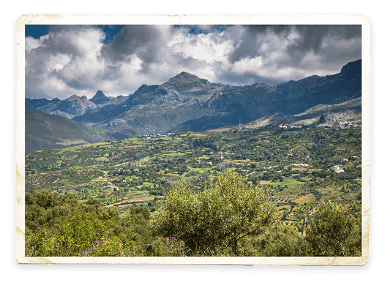
Rif Mountains
Rif Mountains
The Rif Mountains are Morocco’s northerly most mountain range. This rugged mountain chain is roughly bounded by Tangier and Morocco’s Mediterranean coastline to the north, Fez to the south, the Moulouya River (close to the Algerian border) in the east and the Atlantic Ocean near Ksar el-Kebir to the west.
Pretty Chefchaouen, affectionately called Morocco’s blue town, is located here in the Rif Mountains. The northern coastal towns of Tangier, Tetouan and Asilah all offer a convenient gateways to explore the Rif Mountains.
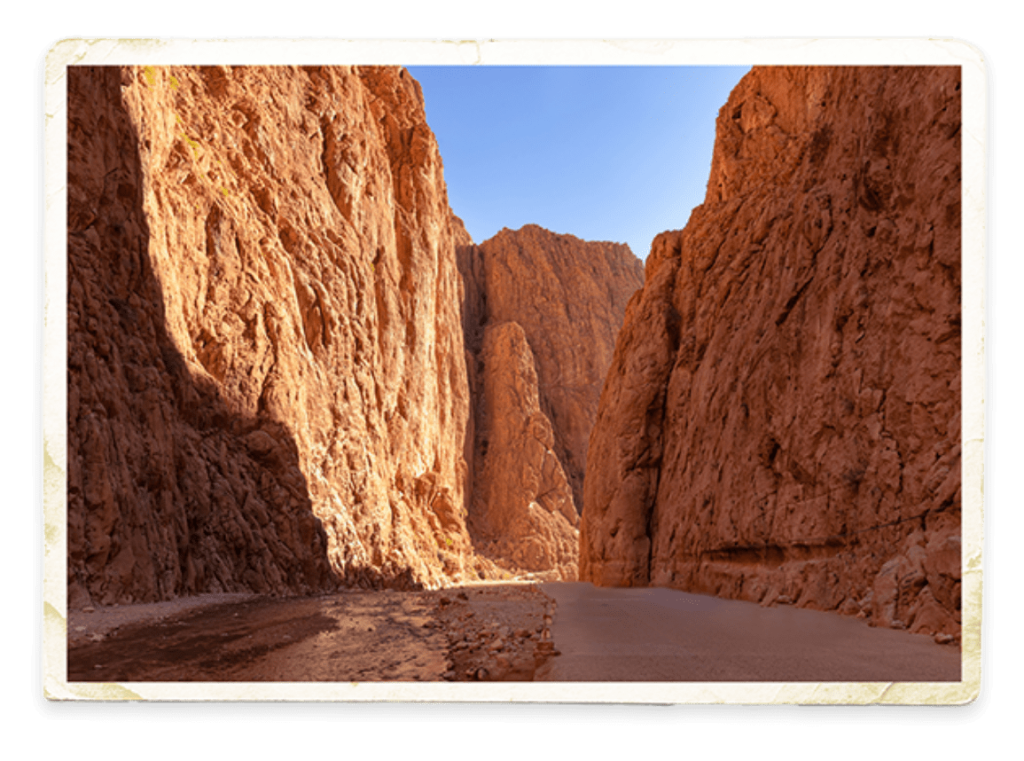
Todra Gorge (Todgha Gorge) & Todra Oasis Valley
Todra Gorge (Todgha Gorge) & Todra Oasis Valley
Over thousands of years, the unrelenting cascading waters of the Todra River have chiselled the Todra Gorge out of the eastern High Atlas Mountains. The result is spectacular. Towering, sentinel cliff-face walls line the last 600 meter section of the ever contracting gorge as the river seeks a path out of the mountains, until at last, the river squeezes through a gap of a little more than 10 meters and makes its way to the Sahara Desert. In the early morning and late afternoon the gorge’s 300 meter high rock walls seem to glow reddish orange when caught by the sun.
A road running in tandem with the river runs through the base of the gorge making it accessible to everyone. The gorge can be explored by an easy walk alongside the river. The road then continues along the Todra River disappearing deep into the reaches of this magnificent eastern section of the High Atlas Mountains.
The verdant, extensive Todra Oasis valley sprawls out on either side of the Todra River as it disgorges from the mountains southeastern passage to Todra Gorge on it meanders route through the Sahara Desert. A multitude of small Amazigh (Berber) villages lining either side of the oasis area. The principal town of this area is the Amazigh (Berber) town of Tinghir (Tingehir).
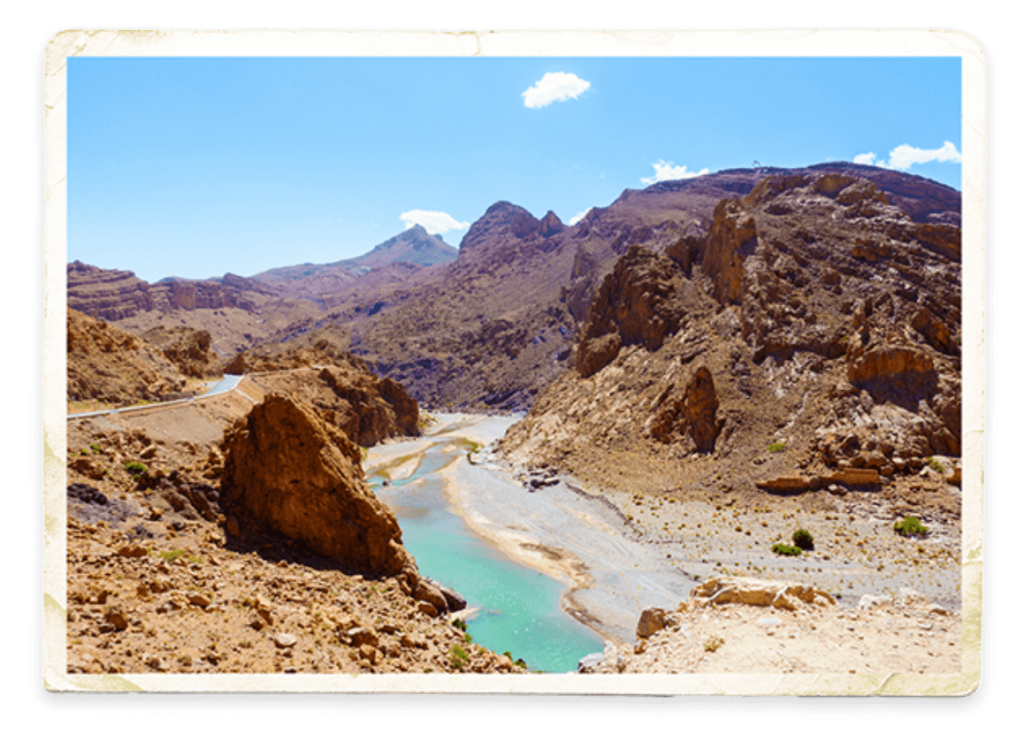
Ziz Gorge & Ziz Valley
Ziz Gorge & Ziz Valley
The Ziz Valley spills out on either side of the Ziz River on its path south from its source in the eastern High Atlas Mountains around the Rich region, through the mountains into the Sahara Desert past Errachadia and Erfoud to desert oasis village of Merzouga on the fringe of the soaring Sahara Desert Erg Chebbi sand dunes.
Along its path the Ziz River has carved scenic gorges into the High Atlas mountains and foothills with the most substantial where the landscape gives way to the Sahara Desert. Just south of Errachadia is the most impressive section of the Ziz Gorge. Here, where the Gorge is at its deepest and widest, a seemingly sinuous sea of endless date palm groves stretches endlessly into the desert horizon.
Once a route for the desert camel caravans travelling from the desert north to Fes, Tangier, the Mediterranean and beyond, the Ziz Valley, including its Ziz Gorges, is populated with small Amazigh (Berber) villages, extensive palm groves and oases.
The Ziz Valley and Ziz Gorge lies on the Fes to Erfoud/Merzouga road.
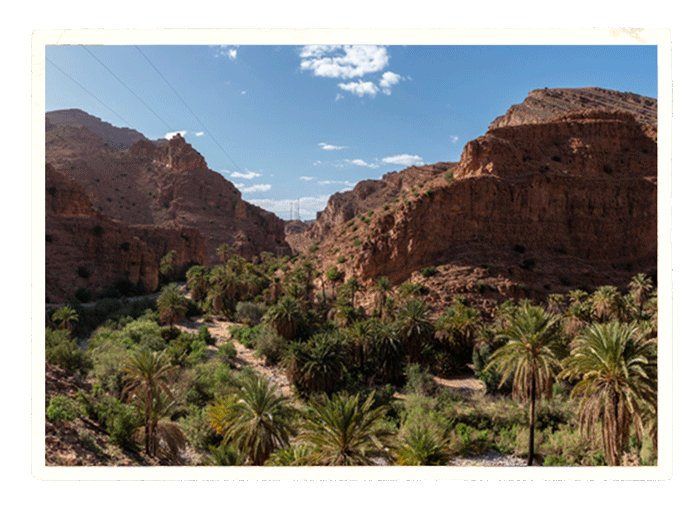
Ait Mansour Gorge
Ait Mansour Gorge
Nestled into the Anti-Atlas Mountains, Ait Mansour Gorge is a breathtaking natural wonder. Traditional Amazigh (Berber) villages, ancient rock carvings, and well-tended lush palm groves stand as living testaments to the areas rich Amazigh heritage.
Located within easy reach of Tafraoute, Ait Mansour Gorge provides a peaceful insight into a thriving coexistence of nature and culture.
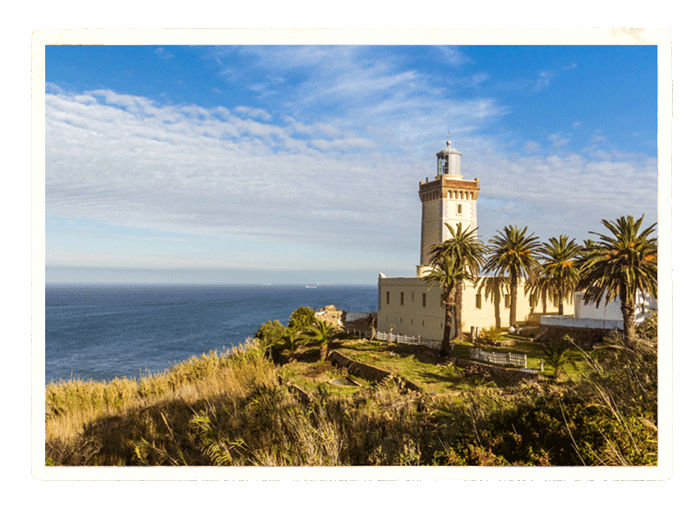
Cape Spartel
Cape Spartel
Cape Spartel is Morocco’s most north-westerly point. The rugged cliff sides of this promontory are shaped by the crashing waves of the Atlantic Ocean and Mediterranean Sea at their southern convergence.
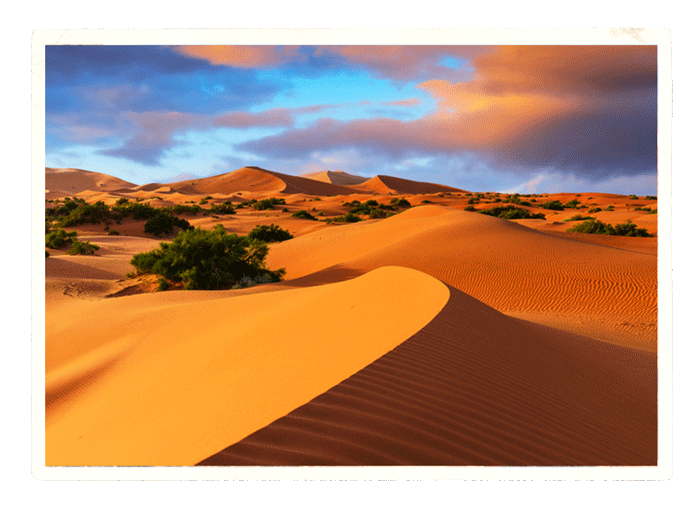
Erg Chebbi
Erg Chebbi
The beautiful Erg Chebbi sand dunes are the highest and most spectacular of Morocco’s northern Sahara Desert region. Reaching over 200 meters, the soaring ochre dunes morph into everchanging hews of glowing, shimmering colour as the sunlight waxes and wanes.
The fierce yet tranquil beauty of these majestic sand dunes within sight of the towering High Atlas Mountains, often snow-capped in winter, is unforgettable.
The home territory of the Amazigh (Berber) blue men for thousands of years, many nomad families have long since settled in the area establishing small villages around the Erg Chebbi sand dune area including Merzouga.
This is Morocco’s premier location for authentic desert experiences. Visitors to the area can experience welcoming desert hospitality and share insights into the unique and precious cultural heritage and traditions of these desert Amazigh.
The Erg Chebbi area is located in the Tafilalt Oasis area, south of Erfoud and Er-rachadia. Ouarzazate, Todra Gorge and Dades Gorge lie to the west of Erg Chebbi.
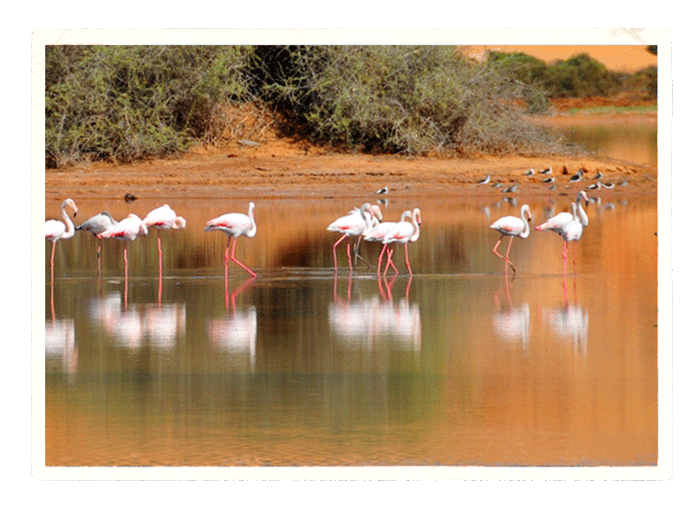
Merja Zerga
Merja Zerga
Merja Zerga National Park, is Morocco’s premier wetland park rich in birdlife. Situated on the Atlantic coast north of Rabat and kenitra, the area’s combination of ocean, coastal lagoon, sand dunes and plentiful fish acts as magnet for numerous migratory as well as resident birds. It is a key point of the East Atlantic Flyway.
Merja Zerga is located at the doorstop of the small fishing village of Moulay Bousselham;
Roughly midway between Morocco’s Atlantic coast imperial city of Rabat and its northern Mediterranean city of Tangier. Larache, Asilah and Kenitra as well as the ancient Roman site of Lixus are around this area.
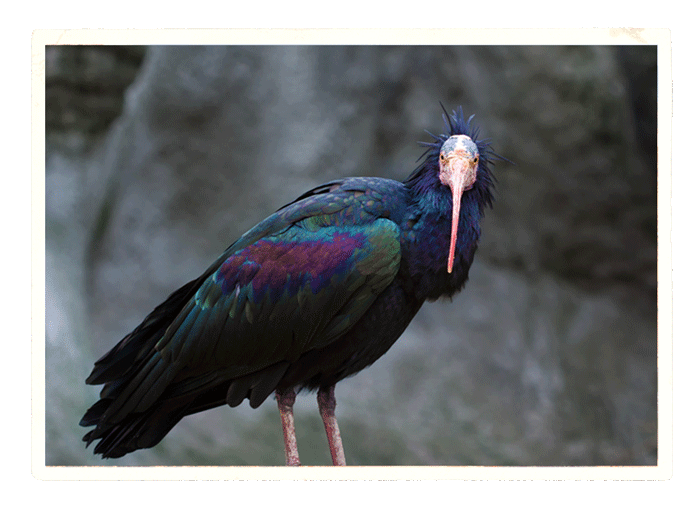
Souss Massa
Souss Massa
Morocco’s Souss Masa National Park is a vital haven for bird and wildlife enthusiasts. This important coastal wetland and estuary area is a crucial stop on the East Atlantic Flyway and renowned for its great variety of bird species. Almost 300 species of birds including the critically endangered Northern Bald Ibis are found here.
Souss Massa National Park is located on an Atlantic coast section of Morocco’s Souss Massa region – a rich agricultural area to the south of the High Atlas Mountains. The park area is most convenient reached from Agadir, Taroudant or Tizinit.
The journey of a lifetime starts here